
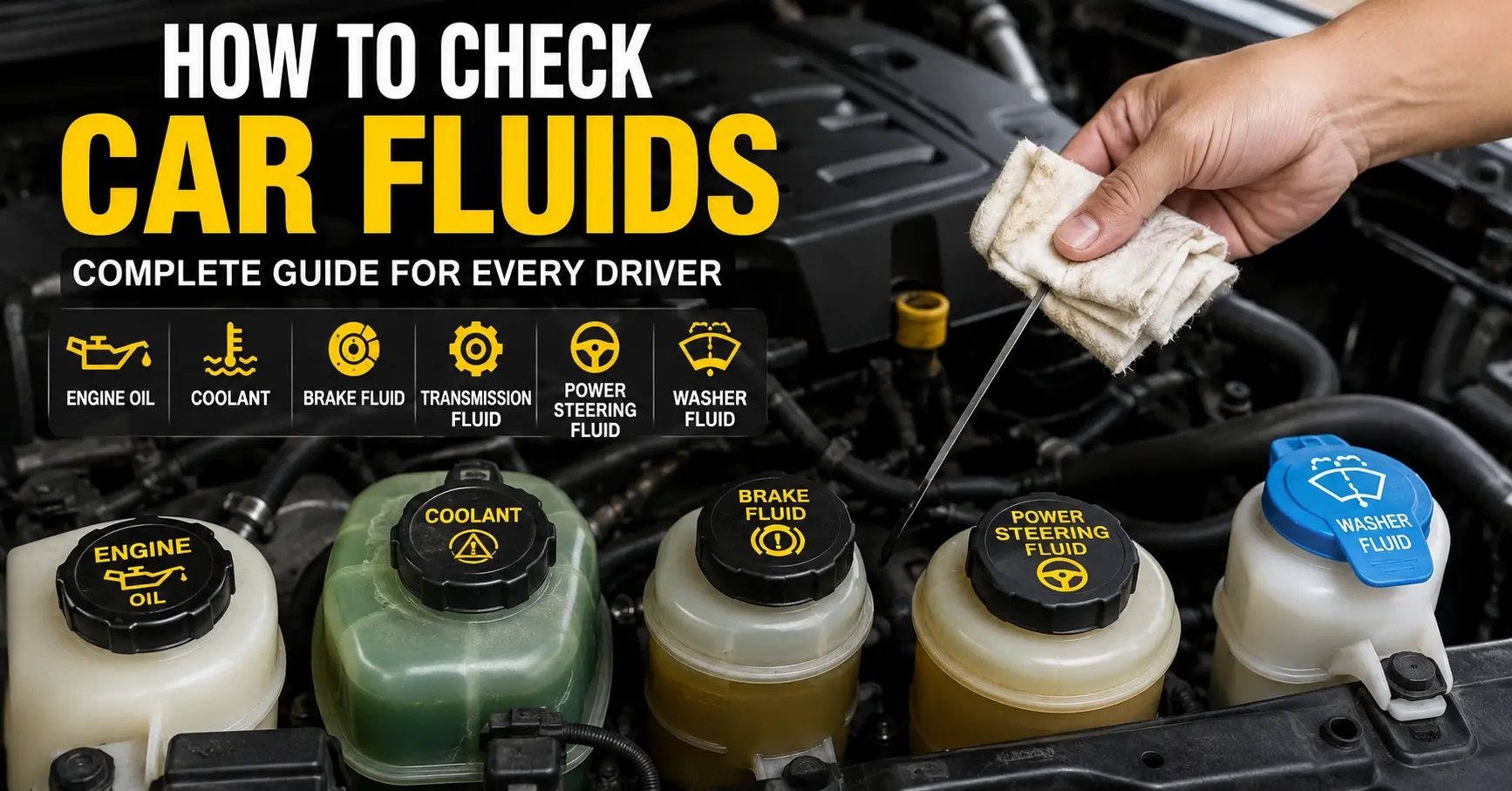
“How to check car fluids” sounds like one of those boring car maintenance tasks nobody wants to deal with — until your engine overheats in traffic, your brakes feel weird, or your dashboard suddenly lights up like a Christmas tree.
The truth is, most drivers ignore fluid levels until something goes wrong. But a simple car fluid check can literally save you thousands of dollars in repairs and help your car last years longer.
And honestly? Checking fluids in a car is way easier than most people think.
You do not need to be a mechanic. You do not need expensive tools. You just need a few minutes, a clean rag, and basic knowledge about what to look for.
- What different fluid colors actually mean
- The biggest mistakes drivers make during a fluid check
- Seasonal fluid maintenance tips
- Warning signs your car is secretly struggling
- Which fluids are dangerous to ignore
- How modern cars are changing fluid maintenance
- Emergency situations most articles never explain
Let’s get into it.
Why Checking Car Fluids Is So Important
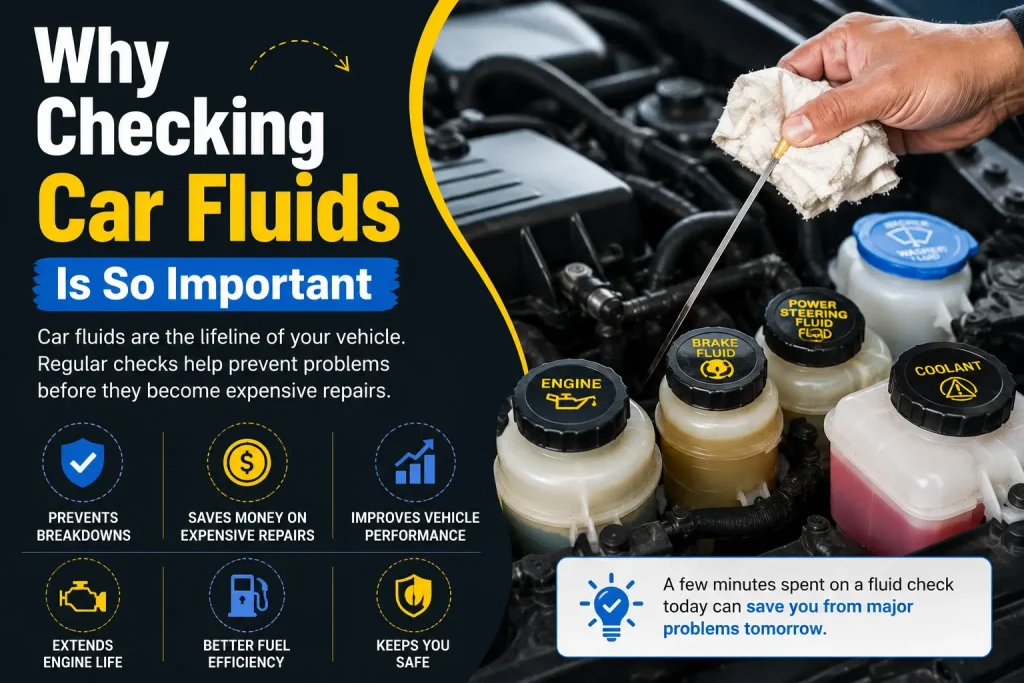
Your car depends on multiple fluids to run safely and properly. These fluids lubricate, cool, clean, and protect major components inside your vehicle.
Without proper fluid levels, your car can suffer from:
- Engine overheating
- Brake failure
- Transmission damage
- Steering problems
- Poor fuel economy
- Expensive repair bills
The scary part?
Most fluid-related problems start small and quietly. By the time drivers notice symptoms, the damage is often already expensive.
That is why regular fluid checks matter.
A quick monthly car fluid check helps you:
- Catch leaks early
- Prevent major breakdowns
- Improve performance
- Extend engine life
- Save money long-term
- Drive more safely
Think of it like checking your phone battery before leaving home. Small habit. Huge difference.
The Main Car Fluids You Need to Check
Before learning how to check car fluids, you need to know which fluids actually matter.
| Fluid | What It Does | Why It Matters |
|---|---|---|
| Engine Oil | Lubricates engine parts | Prevents engine damage |
| Coolant/Antifreeze | Controls engine temperature | Prevents overheating |
| Brake Fluid | Helps brakes function | Critical for safety |
| Transmission Fluid | Lubricates transmission | Smooth gear shifting |
| Power Steering Fluid | Assists steering | Easier turning |
| Washer Fluid | Cleans windshield | Better visibility |
These are the six most important fluids every driver should monitor regularly.
Before You Start: Important Safety Tips
Most people rush into a fluid check without thinking about safety first.
Bad idea.
Before checking fluid levels:
- Park on level ground
- Turn off the engine
- Let the engine cool completely
- Wear gloves if possible
- Keep a clean towel or rag nearby
Most important warning:
Never open the coolant cap while the engine is hot.
Hot coolant systems are pressurized and can spray boiling liquid instantly.
How to Check Engine Oil
Engine oil is basically the lifeblood of your car.
It lubricates moving parts, reduces friction, removes contaminants, and helps control engine temperature.
Low oil is one of the fastest ways to destroy an engine.
Step-by-Step Engine Oil Check
- Park your car on flat ground.
- Turn off the engine.
- Wait 5–10 minutes.
- Open the hood.
- Locate the oil dipstick.
- Pull it out and wipe it clean.
- Insert it fully back in.
- Pull it out again and check the level.
The oil should sit between the “MIN” and “MAX” marks.
If it is low, add the correct oil type recommended by your manufacturer.
What Engine Oil Color Means
Most articles only tell you to “check the oil level.” But the color matters too.
| Oil Color | What It Usually Means |
|---|---|
| Amber/Light Brown | Healthy oil |
| Dark Brown/Black | Older oil, usually normal |
| Milky/Creamy | Possible coolant contamination |
| Thick and gritty | Dirty or contaminated oil |
Milky oil is especially dangerous because it may indicate a blown head gasket.
That repair can cost thousands.
Warning Signs of Engine Oil Problems
Your car may have oil issues if you notice:
- Burning oil smell
- Knocking engine sounds
- Blue exhaust smoke
- Oil warning light
- Rough engine performance
- Poor fuel economy
Never ignore oil warning lights.
Even a few minutes of driving with critically low oil can cause permanent engine damage.
How to Check Coolant Level
Coolant keeps your engine from overheating in summer and freezing during winter.
Modern engines run extremely hot, which makes coolant one of the most important fluids in your vehicle.
Step-by-Step Coolant Check
- Make sure the engine is completely cool.
- Locate the coolant reservoir.
- Check the level against the “MIN” and “MAX” lines.
- Add coolant if needed.
Always use the coolant type recommended for your vehicle.
Coolant Colors Actually Matter
Different coolant colors often mean different chemical formulas.
| Coolant Color | Common Type |
|---|---|
| Green | Traditional coolant |
| Orange | Extended-life coolant |
| Pink/Red | Asian vehicle coolant |
| Blue | European/Asian coolant |
| Brown/Rusty | Dirty or contaminated |
Mixing incompatible coolants can damage your cooling system.
That is why randomly topping off coolant without checking compatibility is risky.
Signs Your Coolant May Be Failing
Watch for:
- Engine overheating
- Sweet smell under the hood
- Steam from engine area
- Coolant warning light
- Puddles under the vehicle
Coolant leaks never fix themselves.
Ignoring them can lead to catastrophic engine failure.
How to Check Brake Fluid
Brake fluid transfers pressure through the braking system.
Without it, your brakes cannot function properly.
This is one fluid you should never ignore.
Step-by-Step Brake Fluid Check
- Locate the brake fluid reservoir.
- Check the fluid level.
- Make sure it sits between “MIN” and “MAX.”
- Add brake fluid if necessary.
Use only the brake fluid specified in your owner’s manual.
What Healthy Brake Fluid Looks Like
Fresh brake fluid is usually:
- Clear
- Slightly yellow
Bad brake fluid often appears:
- Dark brown
- Cloudy
- Dirty
Dark brake fluid usually means moisture contamination.
That reduces braking performance and increases stopping distance.
Signs of Brake Fluid Problems
You may have brake fluid issues if you notice:
- Soft brake pedal
- Longer stopping distances
- Brake warning light
- Grinding sounds
- Fluid leaks near wheels
Low brake fluid is not something to “wait and see” about.
It is a safety issue.
How to Check Transmission Fluid
Transmission repairs are extremely expensive.
That is why regular transmission fluid checks matter so much.
Transmission fluid lubricates gears, reduces heat, and helps smooth shifting.
Step-by-Step Transmission Fluid Check
- Start the engine.
- Let it warm up.
- Place the car in Park or Neutral.
- Locate the transmission dipstick.
- Remove, wipe, reinsert, and check the level.
Healthy transmission fluid is usually red or pink.
Transmission Fluid Color Guide
| Fluid Color | Meaning |
|---|---|
| Bright Red | Healthy |
| Dark Red | Aging |
| Brown | Burnt fluid |
| Black | Serious problem |
A burnt smell often means overheating.
That is one of the earliest signs of transmission trouble.
Symptoms of Transmission Fluid Problems
You may notice:
- Delayed shifting
- Gear slipping
- Grinding noises
- Rough acceleration
- Burning smell
These symptoms should never be ignored.
Transmission replacements are among the most expensive car repairs.
How to Check Power Steering Fluid
Power steering fluid helps you turn the wheel smoothly and comfortably.
Low fluid can make steering feel heavy and difficult.
Step-by-Step Power Steering Fluid Check
- Locate the power steering reservoir.
- Check the level markings.
- Add fluid if necessary.
Some modern cars now use electric steering systems and may not require fluid.
Signs of Low Power Steering Fluid
Watch for:
- Whining sounds while turning
- Stiff steering wheel
- Steering vibrations
- Fluid leaks
Difficulty steering can quickly become dangerous.
How to Check Windshield Washer Fluid
Washer fluid may seem less important, but visibility is critical for safe driving.
Step-by-Step Washer Fluid Check
- Locate the washer fluid reservoir.
- Open the cap.
- Fill with washer fluid.
Avoid using only water during winter because it can freeze inside the system.
The Biggest Mistakes Drivers Make During a Fluid Check
This is where many people accidentally damage their cars.
Overfilling Fluids
Too much fluid can cause:
- Pressure buildup
- Leaks
- Foaming
- Seal damage
More fluid does not mean better performance.
Mixing Different Fluid Types
Not all fluids are compatible.
Mixing coolants or using incorrect oil types can damage systems over time.
Ignoring Small Leaks
Many drivers ignore tiny drips until they become major leaks.
Fluid leaks almost always get worse.
Opening Hot Coolant Caps
This is one of the most dangerous mistakes drivers make.
Always wait for the engine to cool completely.
Seasonal Fluid Maintenance Tips Most Articles Ignore
Different weather conditions affect your car fluids differently.
Summer Maintenance
Hot weather increases stress on:
- Coolant
- Engine oil
- Transmission fluid
Before summer:
- Check coolant carefully
- Inspect for leaks
- Monitor engine temperature
- Replace old fluids if needed
Winter Maintenance
Cold weather affects:
- Oil thickness
- Coolant performance
- Washer fluid freezing
Before winter:
- Use winter washer fluid
- Check antifreeze strength
- Inspect battery condition
- Verify oil condition
Seasonal maintenance dramatically improves reliability.
Modern Cars and Fluid Checks: What Has Changed?
Many newer vehicles now have:
- Sealed transmissions
- Electric steering systems
- Longer oil life
- Electronic fluid monitoring
That sounds convenient — but it also makes drivers less aware of maintenance needs.
Dashboard sensors help, but they should not replace manual checks completely.
A monthly fluid check is still one of the smartest habits you can build.
Emergency Situations: Can You Still Drive?
Most articles avoid this question completely.
Here is the honest answer.
Can You Drive with Low Engine Oil?
No. Serious engine damage can happen quickly.
Can You Drive with Low Coolant?
Only temporarily in emergencies. Overheating can destroy the engine.
Can You Drive with Low Brake Fluid?
Absolutely not. This is dangerous.
Can You Drive with Low Transmission Fluid?
Not recommended. Transmission damage can happen fast.
How Often Should You Check Car Fluids?
Here is a simple maintenance schedule:
| Fluid | Check Frequency |
|---|---|
| Engine Oil | Monthly |
| Coolant | Monthly |
| Brake Fluid | Monthly |
| Transmission Fluid | Monthly |
| Power Steering Fluid | Monthly |
| Washer Fluid | Weekly |
Always perform a fluid check before long road trips.
When You Should Visit a Mechanic
You should seek professional help if you notice:
- Frequent fluid loss
- Smoke from engine bay
- Burning smells
- Strange noises
- Dirty or contaminated fluids
- Dashboard warning lights
- Persistent leaks
Small fluid issues can quickly become major repairs.
Final Thoughts
Learning how to check car fluids is one of the simplest but most valuable car maintenance skills you can have.
Most drivers wait until something goes wrong.
Smart drivers catch problems early.
A quick monthly car fluid check helps you:
- Prevent breakdowns
- Save money
- Improve performance
- Extend vehicle lifespan
- Drive more safely
And honestly? Once you do it a few times, checking fluid levels becomes second nature.
Your car works hard for you every day.
Taking a few minutes to check fluids in your car is one of the easiest ways to keep it healthy for years to come.
You May Also Like It:
Basic Coding Concepts – Beginners Guide
Simple Coding Projects for Beginners
Huffman Coding – The Core of Data Compression Explained
