
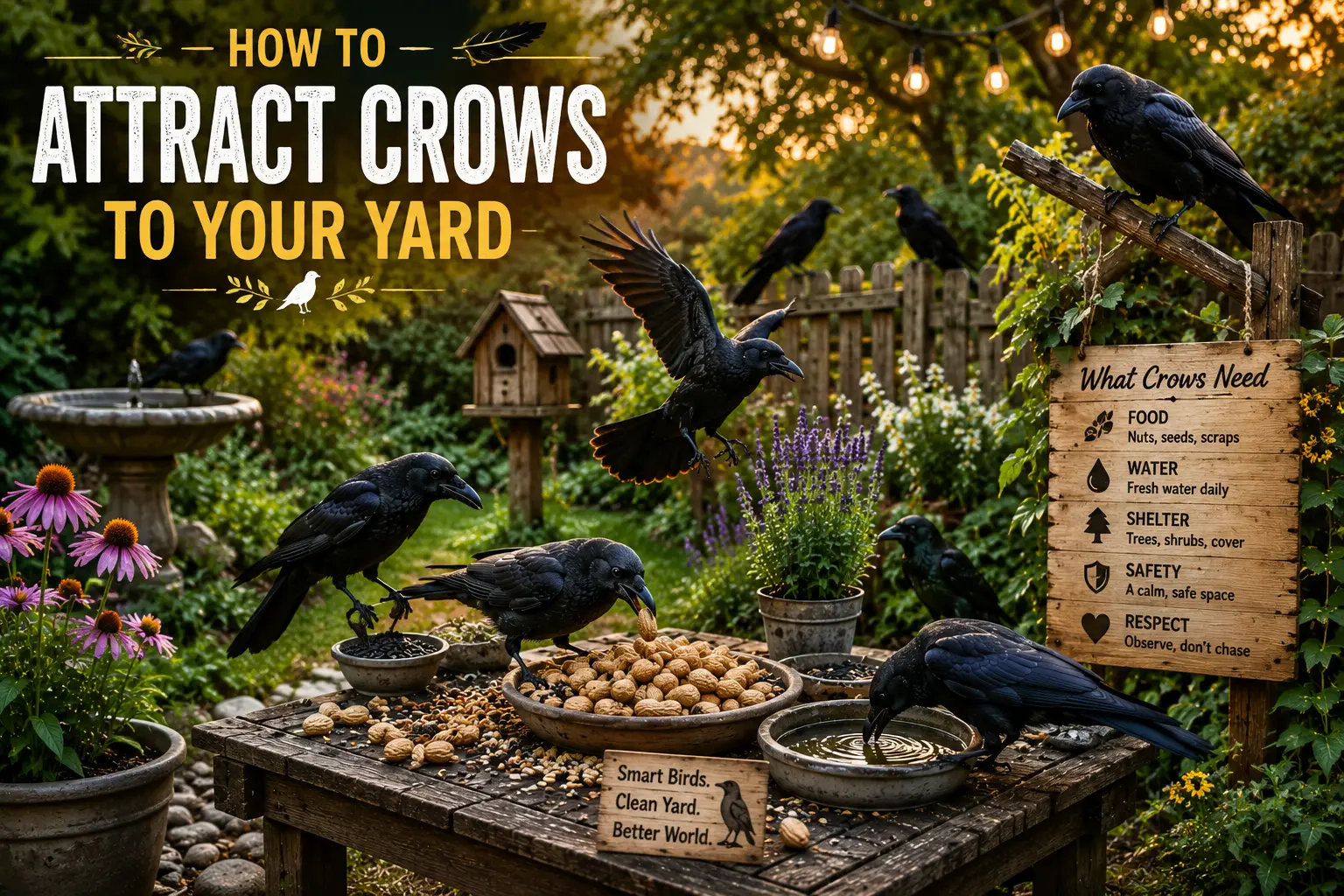
If you’ve ever watched a crow problem-solve its way into a locked trash can or stare you down with those sharp, knowing eyes, you already understand why so many people search for ways to learn how to attract crows to your yard. These remarkable birds are not only highly intelligent but also social, loyal, and capable of recognizing and remembering human faces for years. Some people who have successfully attracted and befriended local crows have even received small gifts in return, such as shiny trinkets, buttons, or other objects that the birds seem to offer as a sign of trust.
Learning how to attract crows to your yard is about much more than simply leaving out food. It involves creating a safe environment, understanding crow behavior, and building trust over time. In this guide, you’ll discover everything you need to know, from the best foods and habitat setup to proven trust-building techniques that can help you create a crow-friendly yard and develop a lasting relationship with these fascinating birds.
Why You Should Want Crows in Your Yard
Crows get a bad reputation in popular culture, but the reality is that having them around is genuinely beneficial. Here is what they bring to the table:
- Natural pest control. Crows eat grubs, beetles, caterpillars, and other insects that damage lawns and gardens.
- Rodent management. They prey on small mice and voles, keeping rodent populations in check.
- Predator deterrence. Crows are territorial and will aggressively mob hawks, owls, and other raptors. If you keep backyard chickens or have small pets, a resident crow family offers a surprising level of protection.
- Carrion cleanup. They consume dead animals and organic debris, acting as nature’s cleanup crew.
- Entertainment and enrichment. Watching crow behavior — their problem-solving, communication, and social dynamics — is endlessly fascinating.
And, if you play your cards right and learn how to befriend crows properly, you may one day find a small offering waiting for you at your feeding spot. Crow gifts are real, and they are worth every bit of patience it takes to earn them.
Understanding Crow Behavior Before You Start
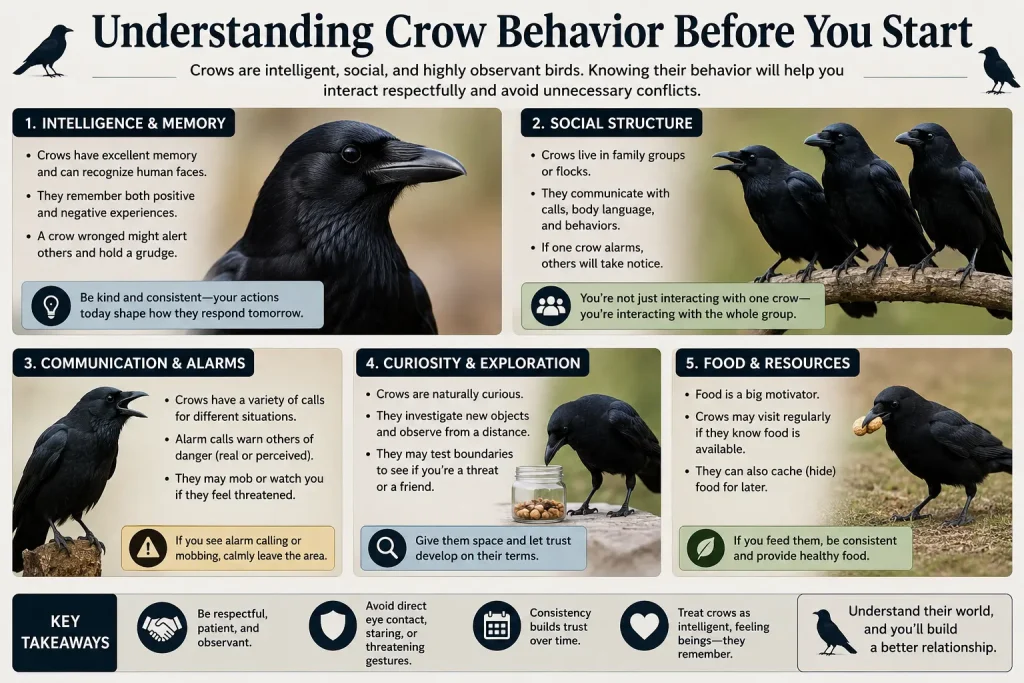
Before diving into tactics, it helps to understand who you are actually dealing with. American Crows (Corvus brachyrhynchos) are members of the Corvidae family, which also includes ravens, jays, and magpies. They have the largest brain-to-body ratio of any bird and demonstrate a level of cognition that rivals great apes in some studies.
Crows Recognize Individual Human Faces
Research from the University of Washington confirmed that crows not only recognize specific human faces but also share that information with other flock members. If you frighten or harm a crow, word spreads quickly — and it is very hard to reverse. On the flip side, consistently kind behavior builds a positive reputation that the whole local murder (the term for a group of crows) will associate with you.
Crows Have Long Memories
These birds remember people, places, and experiences for years. The trust you build today will be remembered well into the future. This is exactly why consistency matters so much when learning how to attract crows to your yard.
Crows Experience Neophobia
Despite their boldness, crows are deeply suspicious of new things. This is called neophobia — a fear of novelty. An unfamiliar object placed in their feeding area can keep them away for days. This is critical to know as you set up your space, because well-intentioned additions (like a new decorative feeder) can actually set your progress back.
Crows Are Social and Family-Oriented
Crows live in tight family groups. Young crows often stay with their parents for a year or two, helping raise younger siblings. When you attract one crow, you are likely attracting a whole family unit. This is good news — it means your yard can become a recognized safe spot for an entire local community.
The Best Foods to Attract Crows
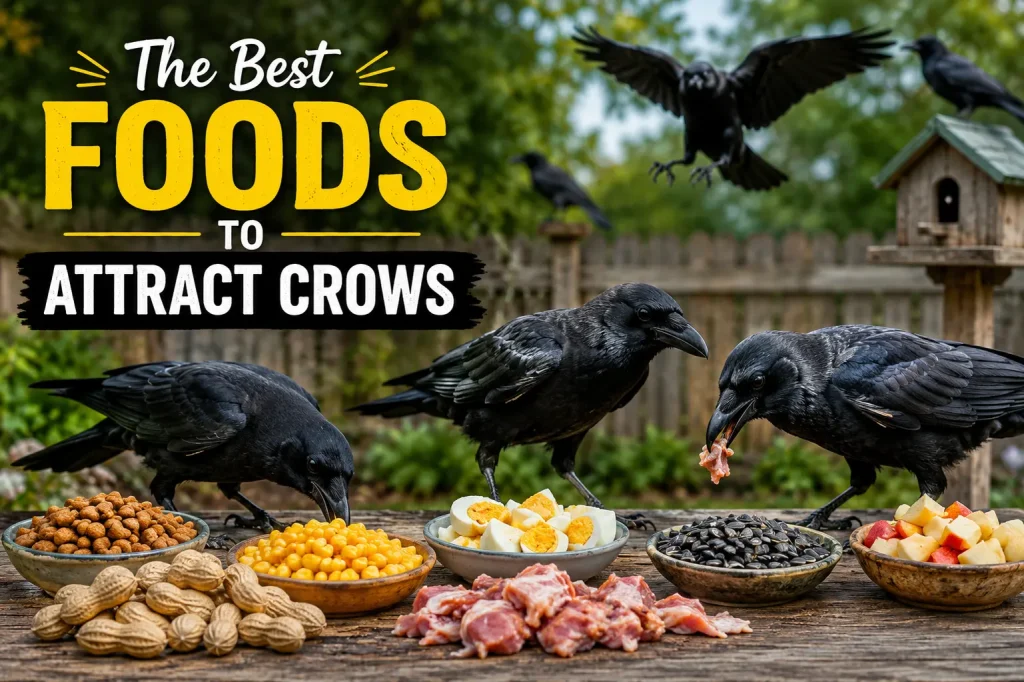
Food is your most powerful tool. Getting the food right from day one will determine how quickly crows discover your yard and decide it is worth returning to.
Top Crow Favorites
- Unsalted peanuts in the shell — This is the gold standard. Crows love the challenge of opening the shell, and the high fat and protein content makes peanuts an irresistible snack. Leave them in a consistent spot every morning.
- Hard-boiled eggs — High in protein, easy to eat, and highly appealing to crows.
- Unsalted meat scraps — Small pieces of cooked chicken, beef, or fish work well. Keep portions small to avoid attracting other wildlife.
- Cat or dog kibble — Dry pet food is a convenient and nutritious option that crows respond to very well.
- Fruits and berries — Grapes, blueberries, apples (cut into pieces), and cherries are good choices.
- Cracked corn — An inexpensive and effective option, especially for attracting larger numbers.
- Mealworms — Both live and dried mealworms are appealing and nutrient-rich.
- Walnuts — Another shell-on nut that engages crow intelligence.
What to Soak Food In
One trick most guides overlook: crows often dunk or soften their food in water before eating it. If you place a shallow water dish near your feeding spot, you may notice crows carrying food over to soften it. This is completely natural behavior and a sign you have set up the environment correctly.
Foods to Strictly Avoid
Some foods are harmful or even toxic to crows:
- Anything high in salt (chips, salted nuts, processed meats)
- Chocolate and caffeine
- Avocado
- Onions and garlic in large quantities
- Moldy bread or spoiled food
- Sugary foods and candy
Plain bread is not toxic, but it offers almost no nutritional value and fills them up without providing any benefit. If you use bread scraps, treat them as a very occasional supplement, not a staple.
Feeding Location Tips
- Use a platform feeder, flat rock, or open tray rather than a tube or hopper feeder — crows are too large for standard bird feeders.
- Place food on the ground or at a low elevation if platform feeders are not available.
- Pick up any uneaten food before dusk to avoid attracting raccoons, rats, or other wildlife.
- Keep the feeding spot clean — dirty areas deter crows and can harbor bacteria.
How to Set Up a Crow-Friendly Yard
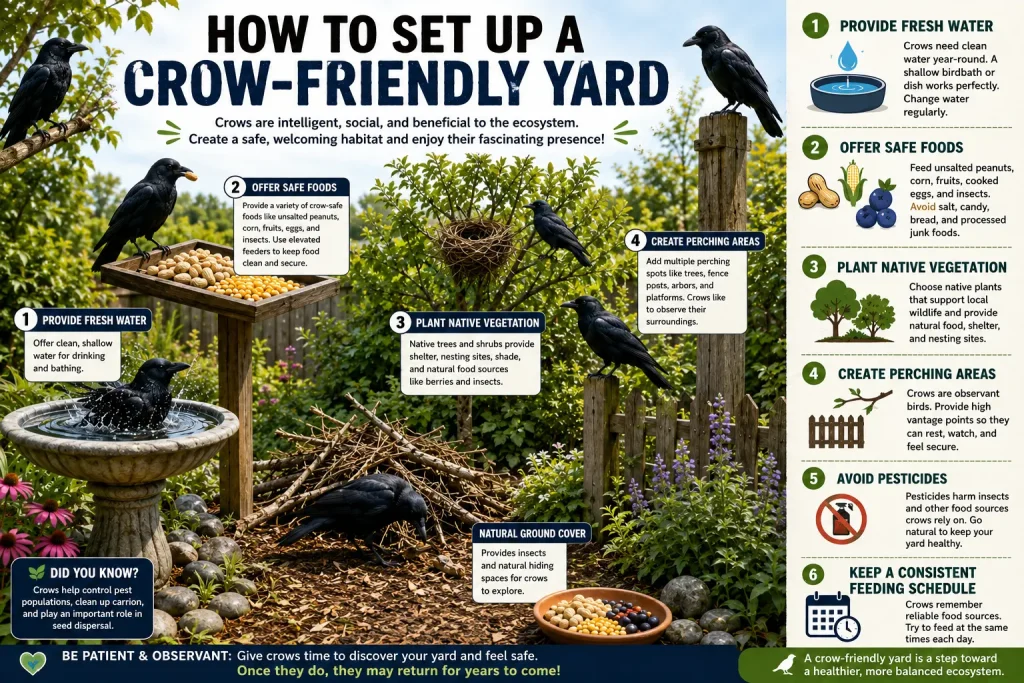
Attracting crows to your yard is not just about food. The physical environment plays a huge role in whether crows feel comfortable enough to stick around.
Provide Tall Perching Spots
Crows are vigilant birds. They prefer to perch high up before descending to eat, so they can survey the area for threats. If your yard has tall trees, you are already ahead. If not, consider:
- Installing a tall, sturdy wooden post (at least 6 to 8 feet high) with a horizontal crossbar at the top
- Using a fence line as a natural perch
- Keeping tall deciduous trees in or near your yard unpruned so they offer natural roosting spots
Add a Bird Bath (This Is More Important Than Most People Realize)
Fresh water is one of the most underrated elements of a crow-friendly yard. Crows use water not just for drinking but for:
- Bathing to remove parasites and maintain feather quality
- Temperature regulation on hot days
- Softening food before eating
Use a large, shallow bird bath — at least 2 to 3 inches deep — with a rough, textured base so they can grip it. Change the water every day or two to keep it fresh. During winter in colder climates, a heated bird bath will make your yard uniquely attractive when other water sources are frozen.
Plant Native Trees and Shrubs
Crows feel more comfortable in spaces with natural cover. Native oaks, pines, and large deciduous trees offer:
- Nesting sites in spring and summer
- Shelter from weather and predators
- Natural food sources (acorns, insects)
If you live in a more urban or suburban area without large trees, dense hedgerows or tall shrubs can serve a similar purpose.
Minimize Disturbances Near Feeding Areas
Avoid placing feeding spots near:
- High-traffic areas like driveways or play areas
- Loud machinery or HVAC units
- Areas where dogs roam freely
Crows need to feel that the feeding area is calm and predictable. Any consistently scary element in the environment will keep them away.
How to Befriend a Crow: Building Real Trust
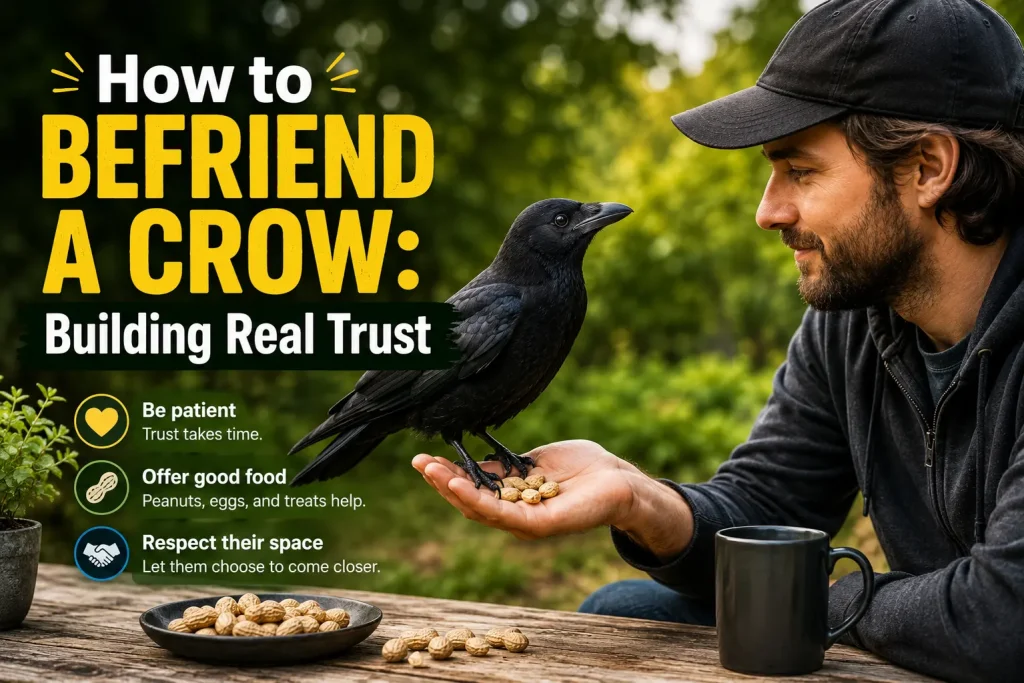
Getting crows to visit is one thing. Learning how to befriend a crow and build a lasting relationship is another level entirely — and it is deeply rewarding.
Step 1: Establish a Routine
Place food at the same spot, at the same time, every single day. Morning is ideal — crows are most active in the early hours. Consistency tells the crows that your yard is a reliable and predictable resource, which is exactly what they need to feel safe enough to return.
Step 2: Make Yourself Visible (Without Being Threatening)
Do not hide when you put food out. Let the crows see you. Stand calmly at a distance while they eat, then gradually decrease the distance over days and weeks. Avoid:
- Sudden movements
- Direct, prolonged eye contact (which crows can interpret as a threat)
- Loud sounds or talking aggressively
- Bringing unfamiliar people or animals into the space unexpectedly
The goal is to make your presence feel boring and safe rather than exciting or dangerous.
Step 3: Talk to Them — Gently
Many experienced crow befrienders use a soft, consistent verbal cue when placing food — a short phrase or a gentle click. Over time, crows associate your voice with the arrival of food. This is basic conditioning, and it works. Keep your tone low and calm.
Step 4: Be Patient — This Takes Weeks or Months
Crows will test you. They may watch from a distance for a long time before approaching. Do not give up if results are slow. The timeline depends on:
- How frequently humans have interacted with the local crow population before
- Whether there are existing competing food sources nearby
- The personality of the specific crow family in your area
Some people see crows approach within two weeks. For others, it takes several months. Either way, the relationship that develops is worth it.
Step 5: Never Harm, Chase, or Frighten Them
This sounds obvious, but it bears saying: crows will not forget negative experiences. Even one frightening incident — a sudden lunge, a loud noise you caused, or a pet that chased them — can undo weeks of trust-building. And because they share information within their group, one bad experience with you can affect how multiple crows perceive you.
Crow Gifts: What to Expect and What It Means
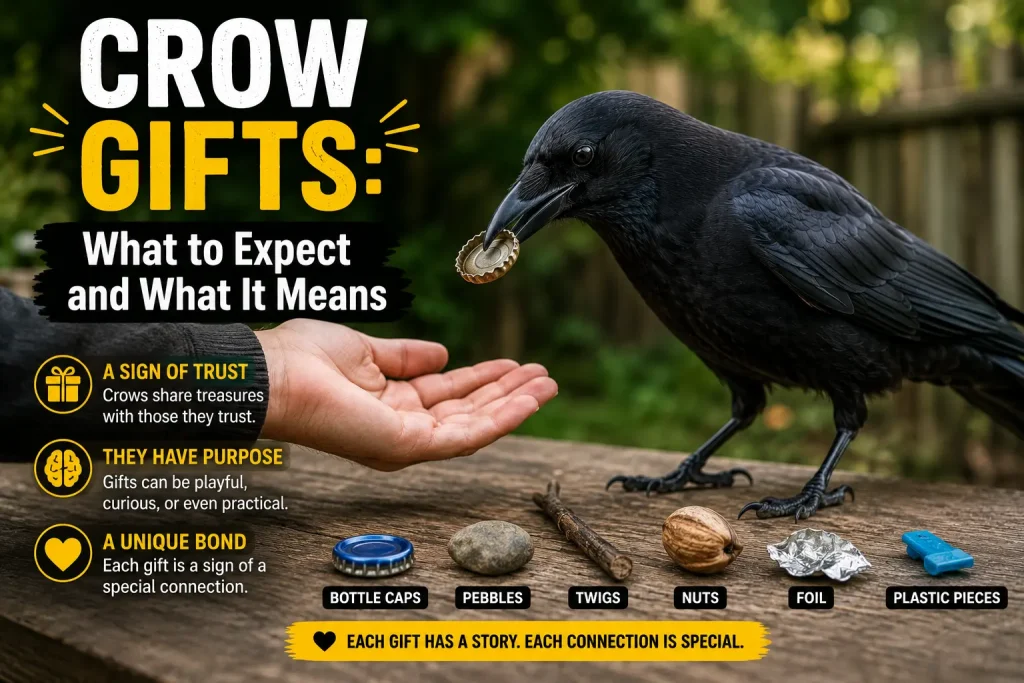
One of the most magical aspects of befriending crows is the possibility of receiving crow gifts. This is not folklore — it is a documented behavior, though it is important to understand it properly.
What Kinds of Gifts Do Crows Bring?
Crow gifts are typically small objects that the bird finds interesting or valuable by its own standards. Common crow gifts include:
- Small pebbles, stones, or pieces of glass
- Bits of wire or metal
- Buttons
- Small pieces of jewelry
- Sticks, twigs, or natural materials (sometimes decorated with moss or lichen)
- Bottle caps
- Pieces of plastic or foil
Do not expect a perfectly shiny treasure. A crow gift is meaningful precisely because it represents the bird’s own taste and judgment — not yours.
Why Do Crows Give Gifts?
Scientists believe gift-giving behavior is linked to the social bonding instincts of corvids. In the wild, crows share food and objects with family members and trusted companions. When a crow brings you something, it is treating you as part of its social circle. It is one of the clearest signs that your befriending efforts have worked.
A Note on Shiny Objects
You may have heard that crows are obsessed with shiny objects. This is actually more myth than reality. Research has found that crows can show neophobia toward shiny things, meaning they are sometimes frightened by them rather than attracted. Young corvids may investigate novel objects out of curiosity, which gave rise to the myth. Do not try to lure crows with shiny items — it is unlikely to work and may actually scare them off.
Common Mistakes That Will Keep Crows Away
If you are not seeing results, you may be making one of these common errors:
- Inconsistent feeding schedule. Missing days resets the crows’ confidence in your yard as a reliable food source.
- Moving the feeding location. Crows need predictability. Keep the spot the same.
- Offering poor-quality or harmful food. Moldy food or salty snacks will deter them or harm them.
- Too much human activity around the feeding area. Groups of people, children playing nearby, or pets wandering the area will keep crows at a distance.
- Using recorded crow calls. Playing crow recordings might seem like a smart shortcut, but crow calls carry complex meaning. A call that sounds neutral to you might be an alarm or aggressive call to a crow, triggering fear or aggression rather than curiosity.
- Using crow decoys incorrectly. A realistic crow decoy may attract curious crows initially, but if it does not move or respond, crows quickly learn it is fake and may become more wary of your setup overall. Use with caution.
- Being impatient and giving up too soon. This is probably the most common mistake of all.
Seasonal Tips for Attracting Crows Year-Round
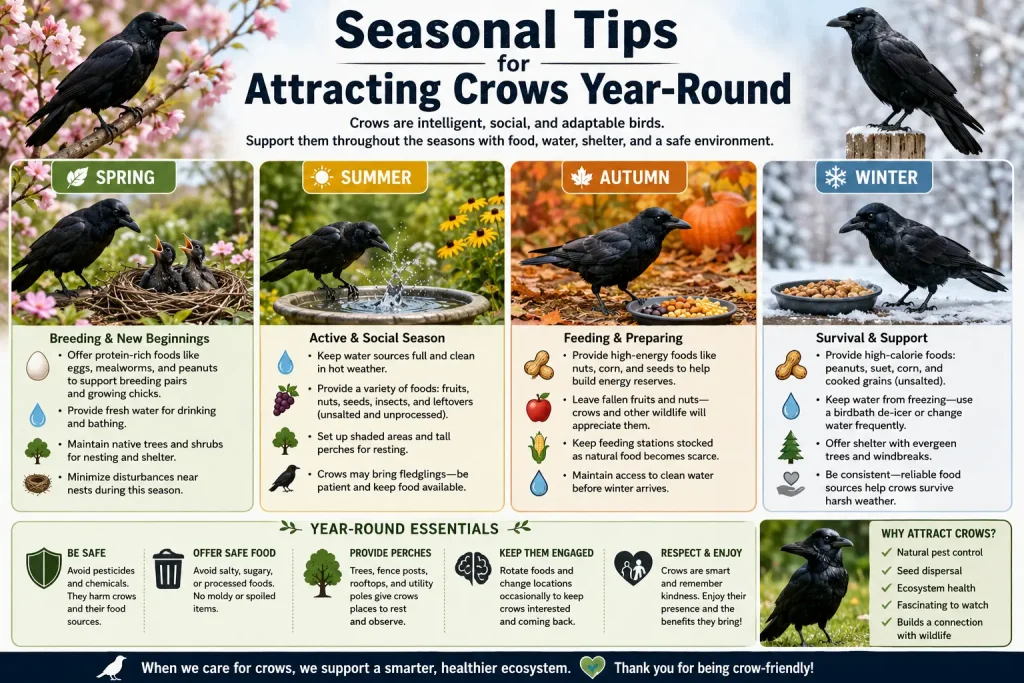
Crow behavior shifts with the seasons, and adjusting your approach accordingly will keep them coming back all year.
Spring
Spring is nesting season. Crows become more territorial and focused on raising young. Continue feeding consistently, but give them extra space. Do not approach nests or interfere with nesting activity.
Summer
Food is more abundant in summer, so crows may visit less frequently. Keep offering food, especially protein-rich options like mealworms and pet food, to maintain the habit. Fresh, cool water becomes especially important in heat.
Fall
Crow activity often increases in fall as family groups begin joining larger communal roosts. This is a great time to solidify your relationship, as crows are more actively foraging before winter.
Winter
Food is scarcer in winter, making your yard more valuable than ever. This is when consistent feeding pays off most — crows that trust your yard will return reliably when natural food sources are limited. In freezing climates, a heated bird bath is a genuine game-changer.
Crow Safety and Legal Considerations
A few important points before you begin:
- American Crows are protected under the Migratory Bird Treaty Act in the United States. It is illegal to harm, trap, or kill them.
- Do not attempt to raise wild crows. If you find an injured crow, contact a licensed wildlife rehabilitator rather than trying to care for it yourself.
- Check local regulations regarding wildlife feeding, as some municipalities have ordinances about feeding wild birds.
- Manage expectations about noise. A group of crows is not quiet. If you have close neighbors, consider whether a regular crow gathering is practical for your situation.
Frequently Asked Questions
How long does it take to attract crows to your yard?
It varies widely depending on your location, existing crow populations, and how consistently you feed them. Some people see results in one to two weeks. For others, it can take two to three months before crows visit regularly. Patience and consistency are the two most important factors.
What is the single best food to attract crows?
Unsalted peanuts in the shell are widely regarded as the most effective food for attracting crows. They are nutritious, shelf-stable, easy to source, and the shell provides mental stimulation that crows enjoy. Hard-boiled eggs and dry pet food are strong alternatives.
How do you befriend a crow?
The key steps to befriend a crow are: establish a daily feeding routine at the same time and place, make your presence calm and predictable, speak softly and consistently when you feed them, decrease distance gradually over time, and never do anything to frighten or harm them. Trust builds slowly but lasts a long time.
Do crows actually bring gifts to people?
Yes, this is a real behavior documented by both researchers and everyday crow feeders. Crows are known to bring small objects — pebbles, buttons, bits of wire, sticks — to people they have formed a bond with. It is believed to be a social behavior related to how they interact with trusted family members in the wild.
Will crows remember me if I stop feeding them for a while?
Yes. Crows have excellent long-term memories and have been documented recognizing individual human faces for years. A gap in feeding may reduce their visiting frequency, but once you resume a consistent routine, the relationship can be re-established fairly quickly if the trust was strong to begin with.
Are crows attracted to shiny objects?
This is largely a myth. Scientific research has not found consistent evidence that crows prefer shiny objects. In fact, crows can show neophobia — fear of new things — including shiny items. Do not use shiny objects as a luring strategy, as it is unlikely to help and may make them more cautious.
Can I attract crows without a yard?
Yes, to some degree. If you have a balcony, rooftop, or a regular outdoor space, you can set up a small feeding area. Crows are adaptable and thrive in urban environments. The same principles apply: consistent location, consistent timing, and calm, predictable behavior from you.
Is it safe to feed crows near other bird feeders?
Crows can dominate a feeding area and intimidate smaller birds. If you want to attract both crows and songbirds, set up separate feeding stations at different locations in your yard. Keep crow food on the ground or on a platform, and keep songbird feeders on poles with baffles at a distance.
Conclusion
Learning how to attract crows to your yard is one of the most rewarding wildlife experiences available right outside your door. These birds are perceptive, loyal, and deeply intelligent — and once they trust you, that trust is lasting. Start with a reliable food source like unsalted peanuts, add fresh water and a calm environment, show up consistently, and give the process time.
Befriending crows is not about tricks or shortcuts. It is about becoming someone they can count on. Do that, and you will not just attract crows — you will earn a place in their world. And on a good day, you might even find a small gift waiting for you at your feeding spot.
You May Also Like It:
Basic Coding Concepts – Beginners Guide
Simple Coding Projects for Beginners
Huffman Coding – The Core of Data Compression Explained
