
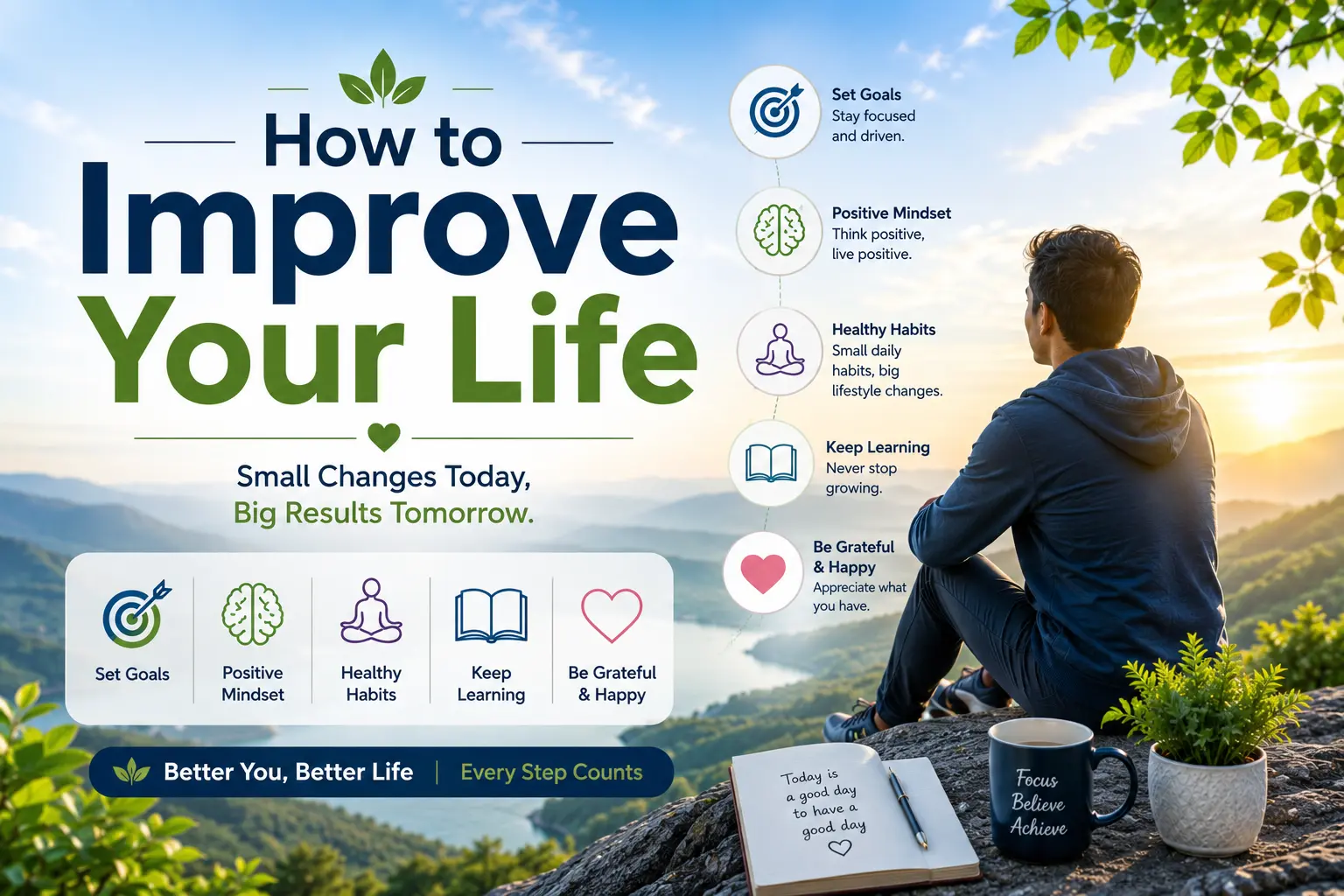
Most people want to improve their lives — but many do not know where to begin. The good news is that learning how to improve life does not require a massive overnight transformation. Small, consistent changes in your mindset, habits, and daily actions can create a powerful impact on your happiness, health, productivity, and overall well-being.
This guide goes beyond generic advice. You will discover practical and science-backed strategies that cover every major area of life, including mental health, physical wellness, relationships, finances, personal growth, and daily routines. Whether you feel stuck or simply want to become a better version of yourself, these tips will help you understand How to Improve Life step by step in a realistic and sustainable way.
Why Improving Your Life Starts With Your Mindset
Before diving into specific habits, it is worth understanding one fundamental truth: the way you think about yourself and the world around you shapes everything else. Your mindset determines whether you see challenges as setbacks or stepping stones.
Fixed vs. Growth Mindset
Psychologist Carol Dweck’s research introduced the concept of the growth mindset — the belief that your abilities and intelligence can be developed with effort and time. People with a growth mindset tend to recover faster from failure, take on more challenges, and experience greater satisfaction in life.
If you catch yourself thinking “I’m just not good at this,” try reframing it to “I haven’t mastered this yet.” That small shift changes your relationship with difficulty entirely.
Stop Waiting for the “Right Time”
One of the most common traps people fall into is waiting for perfect conditions before making a change. The right time to start improving your life is always right now, with whatever resources and energy you currently have. Momentum builds from action, not from waiting.
Build Habits That Actually Stick
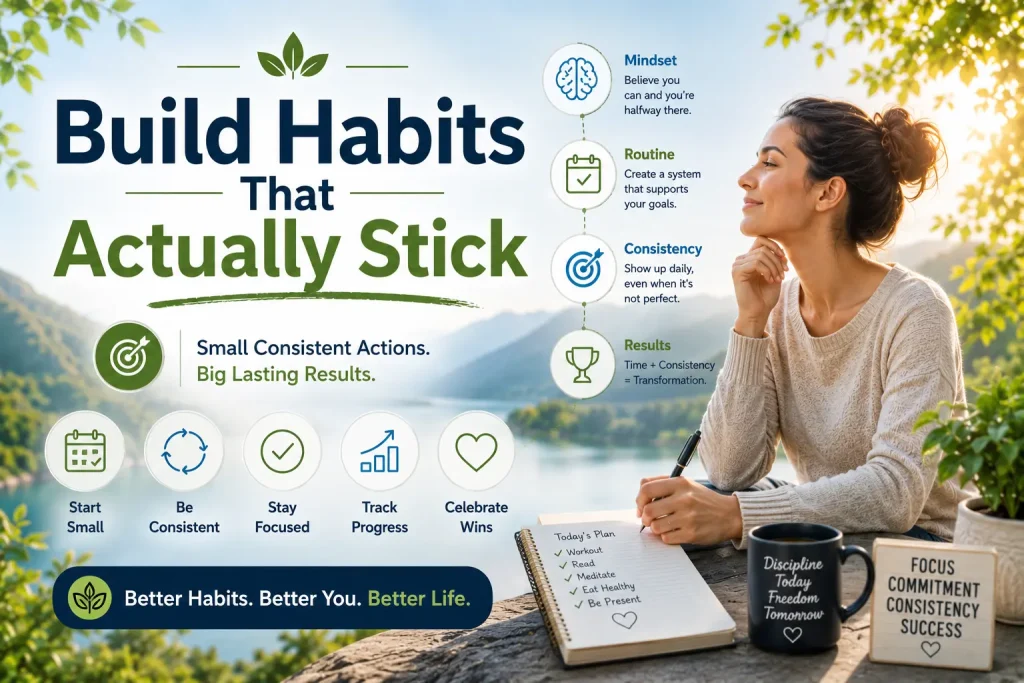
Lasting improvement is not about willpower — it is about systems. The habits you build (or break) determine the quality of your daily life more than any single decision ever will.
Start Embarrassingly Small
When people try to overhaul their lives overnight, they burn out fast. Research in behavioral psychology consistently shows that tiny habits are far more sustainable than dramatic ones. Want to start exercising? Begin with five minutes a day. Want to read more? Start with one page before bed.
Author James Clear calls this the “1% better every day” principle. Improving by just 1% daily compounds into results that are 37 times better by the end of a year. The size of your start does not determine the size of your outcome.
Use Habit Stacking
Habit stacking means attaching a new habit to an existing one. For example: “After I pour my morning coffee, I will write three things I’m grateful for.” This technique works because it leverages established neural pathways instead of fighting against them.
Track Your Progress
Tracking gives you visual proof that your efforts are working. Even a simple checklist on paper creates a “streak” you will not want to break. This psychological effect — sometimes called the Seinfeld Strategy — turns consistency into its own reward.
Take Charge of Your Physical Health
Physical health is the foundation of everything else. When your body feels good, your energy, mood, focus, and resilience all improve alongside it.
Move Your Body Every Day
You do not need a gym membership to get the benefits of regular movement. Even a 20-minute walk outdoors releases endorphins, lowers cortisol (the stress hormone), and improves cardiovascular health. The NHS recommends at least 150 minutes of moderate exercise per week for adults — that breaks down to just over 20 minutes a day.
The key is choosing movement you actually enjoy. Dancing in your kitchen counts. So does a brisk walk with a friend or a casual bike ride on weekends.
Prioritize Sleep Like Your Life Depends on It (Because It Does)
Most adults need between 7 and 9 hours of sleep per night. Chronic sleep deprivation is linked to weight gain, weakened immunity, anxiety, depression, and poor decision-making. Yet sleep is consistently the first thing people sacrifice when life gets busy.
To improve your sleep quality:
- Keep a consistent bedtime and wake-up time, even on weekends
- Avoid screens for at least 30 minutes before bed
- Keep your bedroom cool, dark, and quiet
- Write a to-do list before bed to offload anxious thoughts from your brain
Eat to Fuel, Not Just to Fill
Your diet directly affects your brain function, mood, and energy levels. Research increasingly supports the gut-brain connection — meaning what you eat influences how you feel mentally, not just physically.
You do not need to follow a strict diet. Focus on eating more whole foods (vegetables, fruits, lean proteins, whole grains) and reducing ultra-processed foods. Drink enough water. And notice how different foods make you feel — your body gives you feedback if you pay attention.
Schedule Preventive Health Appointments
Most people only see a doctor when something goes wrong. But regular check-ups, dental cleanings, and health screenings catch problems early when they are much easier to address. Make preventive healthcare a non-negotiable part of your annual routine.
Strengthen Your Mental and Emotional Well-Being

Mental health is just as important as physical health, and it deserves the same level of attention and care.
Learn to Manage Stress Proactively
Stress itself is not always bad — it can sharpen focus in short bursts. But chronic, unmanaged stress erodes your health, relationships, and quality of life over time.
Effective stress management techniques include:
- Deep breathing: Even three slow, deep breaths activate the parasympathetic nervous system and calm the stress response
- Time-blocking: Organizing your day reduces the mental load of constantly deciding what to do next
- Regular breaks: The Pomodoro Technique (25 minutes of focused work followed by a 5-minute break) maintains productivity without draining your mental energy
Practice Gratitude — The Right Way
Gratitude journaling has become popular advice, but its real power comes from specificity. Writing “I’m grateful for my family” every day quickly becomes automatic and loses its emotional punch.
Instead, try writing one specific moment from the day that you appreciated and why it mattered to you. This trains your brain to actively notice positive experiences rather than filtering them out.
Stop Comparing Yourself to Others
Social comparison is one of the fastest routes to dissatisfaction. Social media amplifies this by presenting curated highlight reels as everyday life. The only comparison worth making is between who you are today and who you were yesterday.
This is easier said than done, but a practical first step is to audit your social media consumption. Unfollow accounts that consistently make you feel inadequate, and replace them with content that educates, inspires, or genuinely entertains you.
Seek Professional Support When You Need It
There is still a stigma around therapy and counseling in many cultures, but speaking to a qualified mental health professional is one of the most effective things you can do for your well-being. Cognitive Behavioral Therapy (CBT), in particular, has strong scientific evidence for treating anxiety, depression, and unhelpful thought patterns.
If therapy feels out of reach financially, many communities offer sliding-scale services. Online platforms have also made mental health support more accessible than ever.
Improve Your Relationships and Social Life

Human connection is one of the strongest predictors of happiness and longevity. A famous Harvard study running for over 80 years concluded that the quality of your relationships is the single biggest factor in how well — and how long — you live.
Invest in Deep Relationships Over Many Shallow Ones
In the age of social media, it is easy to accumulate hundreds of online connections while feeling deeply lonely. Research consistently shows that having a few close, trusting relationships matters far more than having a large social network.
Make time for the people who matter. Put your phone down at dinner. Schedule regular one-on-one time with close friends or family. Show up when it counts — at the difficult moments, not just the celebrations.
Become a Better Listener
Most people listen with the intent to reply, not with the intent to understand. Active listening — giving your full attention, resisting the urge to interrupt, and reflecting back what you heard — is one of the most powerful relationship skills you can develop.
When someone feels truly heard by you, trust deepens and conflict decreases. This applies equally to romantic relationships, friendships, and professional relationships.
Set Clear, Respectful Boundaries
Boundaries are not walls — they are the rules of engagement that protect your energy, values, and well-being. People who struggle to say “no” often end up resentful, exhausted, and disconnected from their own needs.
Healthy boundaries sound like: “I can not make it this weekend, but I’d love to catch up the week after.” They are honest, specific, and delivered without excessive apology or justification.
Let Go of Toxic Relationships
Not every relationship deserves a place in your life. Relationships that consistently drain your energy, undermine your confidence, or involve manipulation or disrespect are worth carefully reconsidering. Distancing yourself from toxic dynamics is not selfish — it is a form of self-preservation that protects your mental health and frees you to invest in healthier connections.
Manage Your Money and Create Financial Stability
Financial stress is one of the leading sources of anxiety for adults worldwide. Improving your financial health does not require a high income — it requires clarity, discipline, and a plan.
Know Where Your Money Goes
Most people are surprised when they actually track their spending for a month. Small, habitual expenses (subscriptions, takeout, impulse buys) add up far more than people expect. Use a budgeting app or a simple spreadsheet to categorize your spending and identify where your money is leaking.
Build an Emergency Fund First
Before investing or aggressively paying off debt, financial advisors generally recommend building an emergency fund of three to six months’ worth of living expenses. This cushion removes the anxiety of unexpected costs and prevents you from going into debt every time something breaks or changes unexpectedly.
Invest in Your Future Self
Even small, consistent contributions to a savings or retirement account grow significantly over time due to compound interest. Starting earlier matters far more than starting with a large amount. If your employer offers a pension or retirement match, contribute enough to capture that benefit — it is essentially free money.
Spend Money on Experiences, Not Just Things
Research in positive psychology consistently shows that experiential purchases (travel, concerts, learning a new skill) deliver more lasting happiness than material purchases. Things lose their novelty quickly; experiences become part of your identity and the stories you tell.
Keep Growing: Personal Development and Lifelong Learning

One of the most reliable paths to a meaningful life is continuous learning and personal growth. The moment you stop growing, stagnation sets in.
Read Every Day
Reading is one of the highest-leverage activities available to anyone. A single book can give you the accumulated wisdom of decades of someone’s lived experience in just a few hours of reading. Aim for at least 15 to 20 minutes of reading daily — that adds up to roughly 12 to 15 books per year.
Non-fiction teaches you new skills and perspectives. Fiction builds empathy and emotional intelligence. Both are valuable.
Learn a New Skill Regularly
Learning something unfamiliar — a language, an instrument, a craft, a coding language — keeps your brain sharp and builds confidence. It also expands your identity. When you see yourself as someone who actively learns and grows, it becomes easier to approach challenges with curiosity rather than fear.
Reflect on Your Life Intentionally
Most people live on autopilot, reacting to circumstances rather than intentionally shaping their lives. A weekly or monthly review — even 15 minutes of honest reflection — helps you notice patterns, celebrate progress, and course-correct before small problems become big ones.
Questions worth asking yourself regularly:
- What went well this week, and why?
- What did not go well, and what can I do differently?
- Am I spending my time in line with my values and priorities?
- What is one thing I want to focus on in the coming week?
Define What Success Means to You — Not to Others
One of the most liberating things you can do is to stop outsourcing the definition of success. Society, social media, and family expectations often push a one-size-fits-all version of a good life: certain career, certain income, certain milestones by certain ages.
Your version of a fulfilling life might look completely different — and that is not only acceptable, it is essential. Clarity about your own values and what genuinely matters to you is the compass that keeps you moving in the right direction, even when the road gets difficult.
Create a Life Environment That Supports You
Your environment has a powerful influence on your behavior, mood, and productivity — often more than your intentions do.
Declutter Your Physical Space
Clutter is not just aesthetically unpleasant — research suggests it increases cortisol levels and reduces cognitive clarity. A tidy, organized environment makes it easier to think clearly, focus, and feel calm. You do not need to go full minimalist; just aim for a space that feels functional and peaceful rather than chaotic.
Design Your Default Choices Wisely
Make the healthy choice the easy choice. If you want to eat better, stock your kitchen with nutritious foods and keep fruit on the counter. If you want to read more, put your book on your pillow. If you want to spend less time on your phone, charge it outside your bedroom.
This concept — often called “choice architecture” — is used by behavioral economists to help people make better decisions without relying on willpower.
Limit News and Doomscrolling
Staying informed is valuable. Compulsive news consumption is destructive. The 24-hour news cycle is designed to trigger your stress response repeatedly — which keeps you watching but also keeps your nervous system in a constant low-grade state of alarm.
Set specific times to check the news (once or twice a day), choose reliable sources, and avoid consuming news first thing in the morning or right before bed.
Find Meaning and Purpose Beyond Yourself
Research in psychology and philosophy consistently points to the same conclusion: people who feel their life has meaning and purpose are happier, healthier, and more resilient.
Contribute to Something Larger Than Yourself
Volunteering, mentoring, community involvement, or simply being a genuinely helpful presence in the lives of others creates a sense of meaning that achievement alone rarely provides. Studies show that people who regularly give their time to others report higher levels of well-being than those who focus primarily on personal gain.
Clarify Your Core Values
Your values are the principles that matter most to you — honesty, creativity, family, freedom, growth, service. When your daily life aligns with your core values, you feel a sense of integrity and purpose. When it does not, you feel a low-level dissatisfaction that is hard to name but impossible to ignore.
Take time to identify your top five values and ask yourself honestly: does how I spend my time reflect what I say matters most?
Cultivate Awe and Wonder
Awe — the feeling you get when encountering something vast, beautiful, or beyond ordinary experience — is one of the most underrated emotional states for well-being. Research by psychologist Dacher Keltner shows that awe reduces self-focus, increases generosity, and puts everyday stressors in perspective.
You do not need to climb Everest to feel awe. A star-filled sky, a piece of music that moves you, a stunning landscape, or even a documentary about the deep ocean can all trigger it. Build moments of awe into your life intentionally.
Q: How do I improve my life when I feel overwhelmed?
Start small. Focus on one simple habit at a time, like sleeping earlier or drinking more water. Small wins build momentum.
Q: How long does it take to improve your life?
Some changes happen quickly, while bigger life improvements can take months or years. Consistency matters more than speed.
Q: Is self-improvement selfish?
No. Taking care of yourself helps you become a better partner, friend, parent, and colleague.
Q: Can I improve my life without spending money?
Yes. Better sleep, exercise, stress management, and stronger relationships cost little or nothing but can greatly improve life.
Q: What if I fail while trying to improve my life?
Failure is part of growth. Learn from setbacks, adjust your approach, and keep going.
Q: How do I stay motivated when results are slow?
Take action first. Motivation often follows progress. Focus on small daily wins instead of instant results.
Q: What is the most important thing for improving life?
Self-awareness. Understanding your habits, values, and behavior helps improve every area of life.
Conclusion
Learning how to improve your life is not a single event — it is an ongoing process of small decisions, honest self-reflection, and consistent effort. You do not need to transform everything at once. Pick one or two areas from this guide that resonate most with where you are right now, and start there.
Progress compounds. Habits reinforce each other. The person you become through sustained, intentional effort is someone you will be genuinely proud of. And that is ultimately what improving your life is about — not checking boxes, but becoming someone who lives with energy, purpose, and deep satisfaction.
Start today. Start small. And keep going.
You May Also Like It:
Basic Coding Concepts – Beginners Guide
Simple Coding Projects for Beginners
Huffman Coding – The Core of Data Compression Explained
