
Introduction
What is Web Security The internet has become the backbone of modern life. From online shopping and banking to business communications and data storage, almost everything today runs on the web. While this shift offers countless benefits, it also opens the door to increasing cyber threats. Hackers exploit vulnerabilities in websites, applications, and user behavior to steal data, spread malware, or disrupt services. This is where web security becomes essential.Web security is not just about protecting websites it’s about safeguarding information, users, and businesses from a constantly evolving threat landscape.
Definition of Web Security

Web security refers to the protective measures and protocols that safeguard websites, web applications, and online services against cyber threats. It involves defending systems from attacks that could lead to data breaches, financial loss, or reputational damage.In simple terms, web security ensures that when users interact with websites or online services, their data remains private, safe, and protected from malicious activities.
You May Like It:
Python Backend Development: A Complete Guide
Coding Basics for Beginners – Learn Step by Step
Backend Development Roadmap: Complete Beginner’s Guide
Key Components of Web Security
Network Security
Protecting the underlying networks from unauthorized access, intrusions, and attacks.
Application Security
Ensuring that web applications are free from vulnerabilities such as SQL injections or cross-site scripting.
Endpoint Security
Safeguarding individual devices (computers, smartphones) that connect to the internet.
Data Protection
Encrypting and securing sensitive information such as financial transactions, customer data, and intellectual property.
User Access Control
Implementing authentication and authorization to ensure only authorized users can access systems.
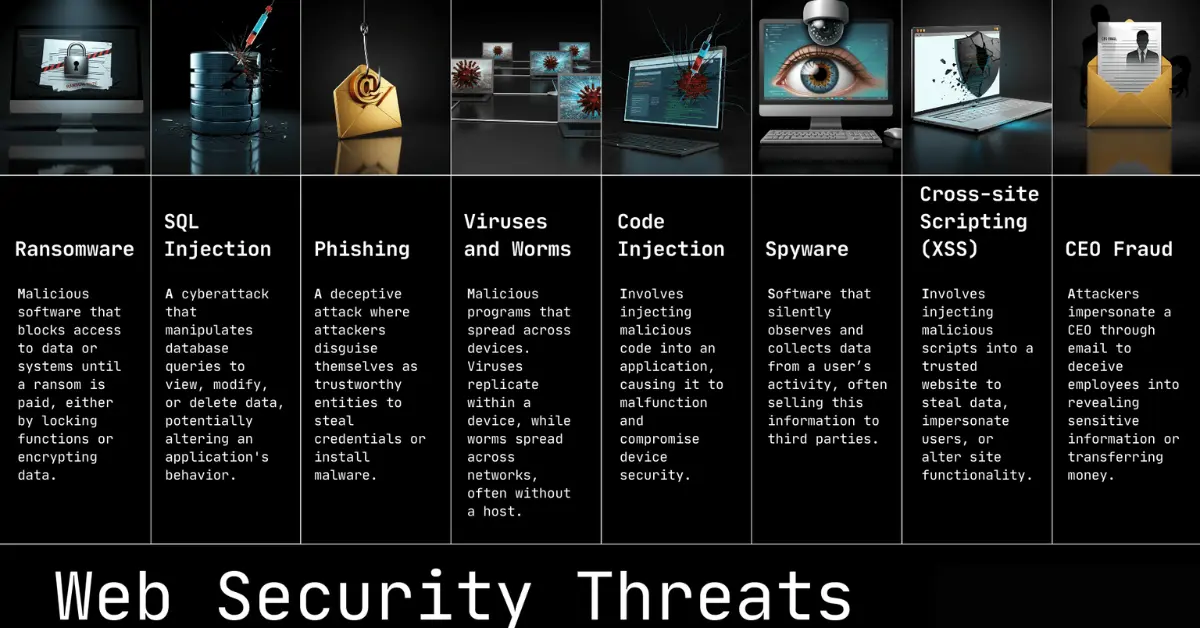
Common Web Threats
- Malware and Ransomware
Malicious software designed to damage systems or lock data until ransom is paid. - Phishing Attacks
Fraudulent attempts to trick users into sharing sensitive information through fake websites or emails. - SQL Injection
A code injection technique where attackers manipulate databases by exploiting vulnerabilities in application queries. - Cross-Site Scripting (XSS)
Attackers inject malicious scripts into websites to steal user data or hijack sessions. - Distributed Denial of Service (DDoS)
Flooding a server or network with traffic to disrupt availability. - Man-in-the-Middle (MITM) Attacks
Cybercriminals intercept communications between two parties to steal data or manipulate messages.
Web Security Best Practices
- Use HTTPS and SSL/TLS Encryption
Encrypts communication between websites and users, ensuring data privacy. - Strong Authentication and Authorization
Implement multi-factor authentication (MFA) and role-based access control. - Regular Software Updates and Patching
Closing known vulnerabilities before attackers exploit them. - Firewalls and Intrusion Detection Systems (IDS/IPS)
Filtering and monitoring incoming and outgoing traffic for malicious activity. - Data Backup and Disaster Recovery
Ensures critical information can be restored in case of attacks or system failures. - Employee Awareness Training
Human error is often the weakest link. Training staff to recognize phishing or suspicious activity is crucial.
Tools and Technologies for Web Security
- Web Application Firewalls (WAF): Protect against web-based attacks such as SQL injection and XSS.
- Antivirus and Anti-Malware Software: Detect and remove malicious software.
- Secure Web Gateways (SWG): Filter and monitor internet traffic to prevent access to harmful content.
- Multi-Factor Authentication (MFA): Adds an extra layer of identity verification.
- Encryption Tools: Protect sensitive data during storage and transmission.
Web Security for Businesses vs. Individuals
- Businesses: Must focus on protecting customer data, ensuring compliance, and maintaining trust. A breach can cause financial loss and brand damage.
- Individuals: Need protection for online privacy, financial security, and safe browsing habits. Simple steps like using strong passwords and avoiding suspicious links go a long way.
You May Like It:
What is Secure Web Gateway (SWG) : Features Benefits and Future
Web Security: Importance Best Practices and Future Trends
Front-End Engineer: Role, Skills, and Career Guide
Importance of Web Security in the Digital Age
- E-commerce Trust: Customers expect safe transactions when shopping online.
- Regulatory Compliance: Laws like GDPR, HIPAA, and PCI DSS require strong data protection measures.
- Protecting Reputation: A single breach can damage credibility and customer confidence.
Future of Web Security
- AI and Machine Learning: Advanced systems that detect and prevent new threats automatically.
- Zero Trust Models: Never trust, always verify—continuous authentication for all users and devices.
- Cloud-based Security Solutions: As businesses migrate to the cloud, security will increasingly be delivered as a service.
- Integration with SASE: Secure Access Service Edge combines networking and security for remote and hybrid environments.
FAQs
What is web security in simple terms?
Web security is the practice of protecting websites, applications, and online data from cyber threats and unauthorized access.
Why is web security important?
It prevents data breaches, protects user privacy, ensures safe transactions, and helps businesses maintain customer trust.
What are the biggest web threats today?
Some major threats include malware, phishing, DDoS attacks, SQL injection, and cross-site scripting.
How does HTTPS improve web security?
HTTPS uses SSL/TLS encryption to secure data exchanged between users and websites, preventing interception by attackers.
Is antivirus enough for web security?
No. Antivirus is just one layer of defense. Comprehensive web security requires firewalls, encryption, access control, and awareness training.
What’s the difference between web security and network security?
Web security focuses on protecting websites and online services, while network security protects the broader IT infrastructure.
How can small businesses improve their web security?
By using HTTPS, deploying firewalls, enabling MFA, training staff, and regularly updating systems.
What role does AI play in web security?
AI helps detect unusual behavior, predict new attack patterns, and automate threat response.
Does web security protect personal data?
Yes. Strong web security prevents identity theft, credit card fraud, and misuse of personal information.
How can users stay safe while browsing?
By avoiding suspicious links, using secure websites (HTTPS), updating software, and enabling multi-factor authentication.
Conclusion
Web security is the foundation of a safe digital environment. It protects businesses from cyberattacks, ensures compliance with regulations, and gives users confidence in online services. With threats growing more advanced every day, adopting a proactive approach to web security is no longer optional—it’s a necessity.By investing in the right tools, training, and policies, both organizations and individuals can create a secure web environment that fosters trust, safety, and growth.
You May Like It
Easiest Coding Language to Learn in 2025
Frontend Masters: A Complete Guide for Web Developers
Frontend Mentor: A Complete Guide for Web Developers
Highest Paying Coding Languages in 2025
