

Buying a car is one of the biggest financial decisions most people make — and the sticker price is almost never the final price. Whether you are negotiating a new car price or a used car price, knowing How to Negotiate Car Price correctly can save you hundreds, or even thousands, of dollars.
Most buyers feel anxious at the dealership because they do not know the rules of the game. This guide changes that. You will learn step-by-step how to negotiate a car price, what to say, what to avoid, and when to walk away — with confidence.
Why Car Price Negotiation Matters
Dealers expect you to negotiate. The sticker price — called the MSRP (Manufacturer’s Suggested Retail Price) — is a starting point, not a final number. Salespeople are trained to maximize profit from every transaction. That is not a criticism; it is simply their job.
Your job is to know your worth as a buyer and push back with data, patience, and a clear strategy. Research consistently shows that buyers who negotiate save an average of $1,500 to $3,000 on new vehicles and even more on used cars, where pricing is more flexible.
This guide gives you the tools to do exactly that.
Know Your Numbers Before You Walk In
The single most powerful thing you can do before entering any negotiation is research. Buyers who arrive at a dealership without data are at a serious disadvantage.
Step 1: Research the Fair Market Value
For new cars, look up the average transaction price — not just the MSRP. The average transaction price reflects what buyers in your area are actually paying. Sites like Edmunds and KBB (Kelley Blue Book) publish this data. Aim for the lower end of the transaction price range.
For used cars, use tools like CARFAX History-Based Value, KBB, and Edmunds True Market Value to get a realistic number for the specific vehicle, its mileage, condition, and location.
Step 2: Know What the Dealer Paid
For new cars, you can often find the invoice price — what the dealer paid the manufacturer. This is not the floor (dealers receive additional rebates and holdbacks from manufacturers), but it is a useful reference point. Your goal is a price slightly above invoice, not at MSRP.
Step 3: Get Pre-Approved Financing
Before you visit any dealership, get pre-approved for a car loan from your bank or a credit union. This gives you two advantages:
You know your real budget and interest rate.
You can use it as leverage to push the dealer’s finance team to beat your rate.
Never walk into a dealership as a “payment buyer” — a buyer who only thinks about monthly payments. Dealers use monthly payment focus to obscure the total cost of the vehicle.
Step 4: Get Competing Quotes
Contact two or three dealerships by email or phone before visiting in person. Ask each one for their best out-the-door price on the exact vehicle you want (same make, model, trim level, and color). This creates competition and gives you real numbers to use at the table.
Step 5: Check for Manufacturer Incentives
Manufacturers regularly offer cash rebates, low-interest financing promotions, and loyalty bonuses. These are separate from the negotiated price and can stack on top of your discount. Research current incentives before your visit so you know what you are entitled to.
How to Negotiate a Car Price at the Dealership

Walking into a dealership prepared is half the battle. Here is how to handle the negotiation from start to finish.
Set the Ground Rules Immediately
When you sit down with a salesperson, establish control early. Tell them clearly:
- You have already researched the vehicle, the fair market value, and competing prices.
- You know the trim level and options you want.
- You are ready to buy today if the price is right.
- You are speaking with other dealerships.
This signals that you are a serious, informed buyer — not a browsing visitor they can push around.
Always Negotiate the Total Price, Not Monthly Payments
This is the most important rule in car price negotiation. Dealers love to shift the conversation to monthly payments because it allows them to hide the true cost inside a long loan term or a high interest rate.
Always anchor the conversation on the out-the-door price — the total price you will pay including taxes, fees, and all charges. Only after you have locked in that number should you discuss financing.
Start With a Low but Reasonable Opening Offer
Begin your offer below your target price to leave room for negotiation. A reasonable starting point for a new car is 3% to 5% below the average transaction price. For a used car, start 10% to 15% below the asking price, depending on how long the vehicle has been on the lot.
Do not insult the salesperson with an absurdly low offer. A lowball offer breaks the negotiation before it starts. Make your offer firm, polite, and backed by data.
Say something like: “Based on my research, I am prepared to offer [dollar amount] for this vehicle today. This reflects the average transaction price in this area and a fair profit for your dealership.”
Negotiate Up, Not Down
Do not start at the sticker price and try to push the dealer down. Start at your offer and let the dealer try to move you up. Small, controlled increases signal that you have a firm ceiling. Large jumps signal that you have room to go much higher.
Use Competing Quotes as Leverage
If you received a lower quote from another dealership, mention it without revealing the exact number right away. Say: “I have a lower offer from another dealer. Can you beat it?” If they ask for the number, only reveal it if their best offer is still too high.
Stay Patient and Let Silence Work for You
Silence is a negotiating tool. After you make an offer, stop talking. Salespeople are trained to fill silence. Let them. The person who speaks first after a significant offer often gives more ground.
When the salesperson excuses themselves to “talk to the manager,” that is normal. Use the wait time to stay calm and committed to your number.
Know When to Walk Away
Walking away is your most powerful weapon. If the negotiation stalls and the dealer refuses to move within your target range, stand up, thank them for their time, and leave.
Many buyers receive a phone call or are stopped at the door with a better offer. Even if they do not, you have made clear that you will not be pressured — and you can move to the next dealership.
Do not cave simply because you feel bad for the salesperson, you have been there for two hours, or the car is “perfect.” Time pressure and emotional pressure are dealer tools. Recognize them and walk away anyway.
How to Negotiate a Used Car Price
Negotiating used car price is both easier and harder than negotiating a new car price. It is easier because there is no MSRP anchor — the asking price is set by the dealer or seller and is often inflated. It is harder because every used car is unique, and pricing depends on condition, history, and mileage.
Get the Vehicle History Report First
Before negotiating a used car price, always pull a CARFAX or AutoCheck vehicle history report. A clean report supports the asking price. A report with accidents, title issues, or odometer discrepancies gives you concrete reasons to negotiate a lower price.
Highlight any issues in the report when making your offer. Say: “I see the vehicle had a reported accident in 2022. I would need to factor that into my offer.”
Get an Independent Pre-Purchase Inspection
This is one of the most underused moves in used car negotiation, and most competitors fail to emphasize it. Before finalizing any used car deal, pay a trusted independent mechanic $100 to $150 to inspect the vehicle. This inspection often reveals issues the seller did not disclose.
Any problems found during the inspection become negotiation points. Even a vehicle in good condition usually reveals wear items — tires, brakes, belts — that you can use to justify a lower price.
Research the Specific Vehicle’s Value
Use at least two pricing tools (KBB, Edmunds, CARFAX Value) and compare listings for the same year, make, model, trim level, and similar mileage in your area. Know the price range before you make any offer.
Make Your First Offer and Justify It
When you make your offer on a used car, always explain your reasoning. Mention the vehicle history report findings, the inspection results, the market comparisons, and any visible wear. This transforms your offer from a random number into a documented position that is harder to dismiss.
Ask How Long the Car Has Been on the Lot
This is a detail most buyers never ask — and it is critical. A car that has been sitting for 60 or 90 days is a motivated seller’s nightmare. Dealers pay interest (called floor plan financing) on every vehicle they hold. The longer a car sits, the more pressure the dealer feels to move it. Ask directly: “How long has this car been in inventory?” Then use that information.
How to Negotiate Used Car Price When Buying Private
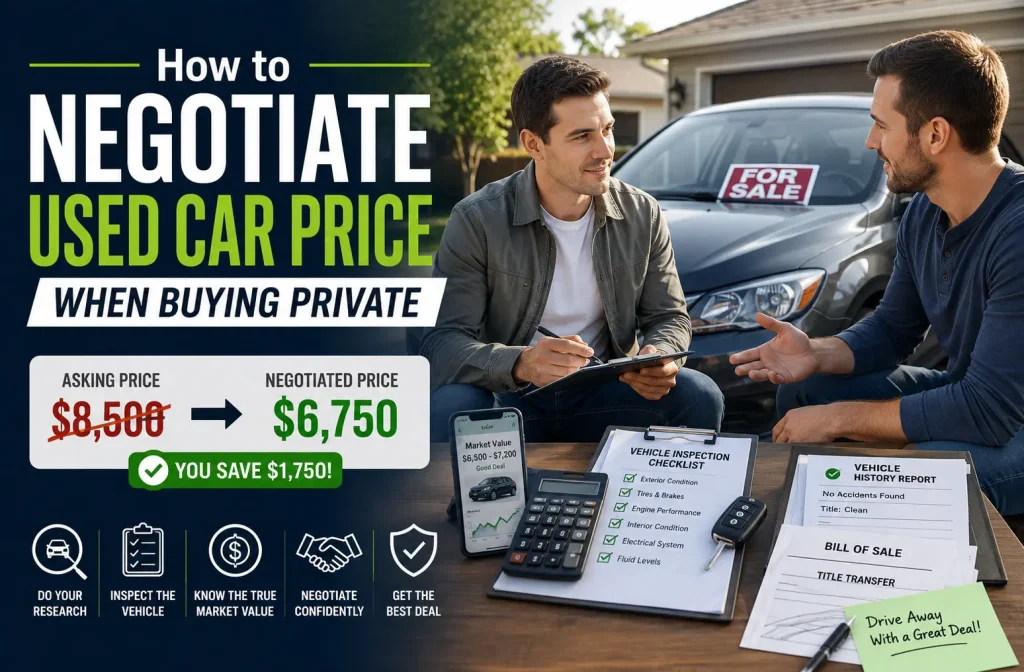
Buying from a private seller removes dealer fees and can produce better prices — but the negotiation dynamics are different.
Research Comparable Listings
Search the same vehicle on platforms like Facebook Marketplace, Craigslist, and AutoTrader. Know what similar cars are selling for in your area. Private sellers often price emotionally rather than analytically, which means there is usually room to negotiate.
Use Condition as Your Primary Lever
Walk around the car systematically. Check for rust, paint inconsistencies, tire wear, and interior damage. Look under the hood. Test all electronics, air conditioning, and the spare tire. Every issue you find is a negotiating point.
Keep a mental or written list and present it calmly: “I noticed the rear tires are nearly worn out and the AC blows warm. Replacing the tires alone is around $400. I would need to account for that in my offer.”
Offer Cash and Ask for the Best Price
Private sellers often respond well to a straightforward cash offer. After your inspection, say: “I am serious about this car and ready to buy today. What is the best price you can do?” Let them make a move first, then counter from there.
Never Skip the Vehicle History Report
Even private sellers must be held accountable for the vehicle’s history. Always pull the report before handing over any money. An accident-damaged or salvage-title car has dramatically lower value than a clean-title vehicle.
Negotiating Used Car Price: Timing Is Everything
When you negotiate matters almost as much as how you negotiate.
Best Times to Negotiate
- End of the month: Sales teams have monthly quotas. In the final days of the month, managers are more motivated to approve deals to hit their numbers.
- End of the quarter: Quarterly quotas create even more urgency, especially in March, June, September, and December.
- Weekday afternoons: Traffic is lower, salespeople are less distracted, and you receive more focused attention.
- Holiday weekends: Dealers advertise heavily and need sales volume. Memorial Day, Labor Day, and Black Friday weekend are historically strong negotiating windows.
- When a new model year arrives: Once a new model year hits the lot, dealers want to clear the previous year’s inventory quickly. You can often negotiate significant discounts on outgoing models.
Dealer Tactics to Watch Out For
Knowing the playbook is part of winning the negotiation. Here are the most common tactics dealers use — and how to counter each one.
The “Four Square” Method
Some dealers use a worksheet divided into four boxes: purchase price, trade-in value, down payment, and monthly payment. They juggle numbers between the boxes to obscure the true deal. Counter this by refusing to discuss all four at once. Insist on settling the purchase price first and nothing else.
“Let Me Talk to My Manager”
This is a delay tactic designed to wear you down and make you feel the deal is almost done. Stay patient. Repeat your position calmly every time the salesperson returns.
Rebate as a Discount
Some dealers claim that manufacturer rebates replace the price discount you negotiated. This is false. Rebates come directly from the manufacturer and are separate from any price discount you negotiate at the dealer level. Do not let one substitute for the other.
Packing the Payment
If you discuss monthly payments, dealers may add extras — extended warranties, paint protection, gap insurance — into the payment without clearly disclosing them. Always ask for a full itemized breakdown of every charge before signing anything.
The “This Deal Expires Today” Pressure
A genuine deal does not evaporate overnight. If a salesperson tells you the price is only good today, it is a pressure tactic, not a fact. Good prices generally remain available. Take the time you need.
Dealer-Installed Add-Ons
Watch for dealer-added accessories already installed on the vehicle — paint sealant, nitrogen-filled tires, window tint, etc. These are often marked up enormously and are non-negotiable as presented. Ask for them to be removed or priced individually at fair market rates.
How to Handle Trade-Ins the Right Way
A trade-in is a separate transaction from your car purchase, and you must treat it that way.
Research Your Trade-In Value First
Before visiting the dealership, get trade-in quotes from at least three sources: CarMax, Carvana, and your local dealership. These quotes are free, take less than 30 minutes total, and give you a realistic floor for your vehicle’s value.
Do Not Mention Your Trade-In Until the Purchase Price Is Agreed
This is critical. If you mention a trade-in early, the dealer will bundle the numbers, making it impossible to know if you got a good deal on either transaction. Lock in your purchase price first, then introduce the trade-in as a separate negotiation.
Use Your Outside Quotes as Leverage
If CarMax offered you $14,000 for your trade, the dealer needs to beat that to earn the trade-in. Show them the offer in writing. If they cannot match it, sell your car to CarMax or Carvana separately and walk into the new purchase as a clean cash buyer.
Selling Privately vs. Trading In
Private sale will almost always get you more money for your old car than a trade-in. The dealer must make a profit reselling your vehicle. A private buyer does not. If you have time and want to maximize value, sell your car privately before buying your next one.
Financing Negotiation Tips Most Buyers Miss

Financing is where dealerships make a significant portion of their profit — and where uninformed buyers overpay the most.
Always Come With Pre-Approved Financing
Get pre-approved from your bank or credit union before visiting any dealer. Your pre-approval sets a benchmark. If the dealer cannot beat your rate, you use your own financing. If they can beat it, you may save even more.
Understand the Dealer Markup on Interest Rates
Dealers do not simply pass along the lender’s interest rate. They add a markup — often 1% to 2.5% — and keep that difference as profit. By having a competing rate, you eliminate or significantly reduce this markup.
Watch Loan Term Length
A longer loan term reduces monthly payments but dramatically increases total interest paid. A 72-month or 84-month loan on a used car is often a poor financial decision. Aim for 48 to 60 months maximum, and always calculate the total cost of the loan, not just the monthly payment.
Read the Finance and Insurance (F&I) Office Carefully
After the main negotiation, you will be directed to the F&I office to sign paperwork and finalize the deal. This is where dealers attempt to sell extended warranties, gap insurance, paint protection packages, and credit life insurance.
Some of these products have value. Many are overpriced. Know which ones you want before entering the F&I office, and say no firmly to everything else. You can often purchase extended warranties separately after the sale for a fraction of the dealer’s price.
What to Do After the Deal Is Done
Most guides stop at “sign the papers.” Here is what your competitors are not telling you about what happens after the deal.
Review Every Line of the Contract
Do not skim. Read every number on every page. Confirm the purchase price matches what you agreed to, the interest rate matches your approval, the loan term is correct, and no extra products were added without your knowledge.
Confirm the Out-the-Door Price Was Honored
The out-the-door price includes taxes, registration fees, documentation fees, and any agreed-upon accessories. Compare this against what you negotiated. Any discrepancies should be corrected before you sign.
Understand Your Cooling-Off Rights
In the United States, there is generally no federal “cooling-off” right for vehicle purchases made at a dealership. Once you sign, the deal is typically final. This is why reading everything before signing matters so much.
Register Your Ownership and Protect Your Investment
After purchase, register the vehicle promptly, update your insurance, and file the title in a safe place. If the car is used, schedule a full service inspection so you know exactly what maintenance is due.
Common Mistakes to Avoid
Even prepared buyers make avoidable mistakes. Here are the most costly ones:
- Focusing on monthly payments instead of total price
- Mentioning your trade-in before the purchase price is locked
- Falling in love with one specific car and letting the dealer see it
- Rushing the process because you need a car urgently
- Signing documents without reading them
- Accepting the first offer on a used car without countering
- Ignoring the vehicle history report to save $40
- Skipping the pre-purchase inspection on a used vehicle
- Letting time pressure push you into a bad deal
- Neglecting to compare financing from multiple sources
Quick-Reference Negotiation Checklist
Use this before and during your car buying process.
Before You Go
- Research the fair market value using at least two pricing tools
- Get pre-approved for financing from a bank or credit union
- Collect competing quotes from at least two other dealerships
- Check current manufacturer incentives and rebates
- Research the trade-in value of your current vehicle at three sources
At the Dealership
- Establish ground rules: you are informed, you have competing quotes, you are ready to buy today
- Negotiate the purchase price first, all other items second
- Start with a low, reasoned offer and let the dealer respond
- Do not reveal your trade-in or financing situation until price is agreed
- Ask for the full out-the-door price in writing before signing
For Used Cars Specifically
- Pull the vehicle history report before negotiating
- Schedule an independent pre-purchase inspection
- Ask how long the car has been on the lot
- Use condition findings and history report issues as negotiating points
At the F&I Office
- Read every line of every document
- Confirm all numbers match what was agreed
- Decline unwanted add-on products firmly but politely
- Never sign a blank or incomplete contract
Final Word
Learning how to negotiate car price is a skill that pays for itself every time you buy a vehicle. The dealer is experienced and trained. You can match that experience with preparation, data, and patience.
Know your numbers. Control what you negotiate. Treat the trade-in and financing as separate conversations. And always be genuinely willing to walk away. Those four habits will consistently produce better outcomes than most buyers achieve.
The best deal is not always the absolute lowest price — it is the price where you feel confident you did not overpay. With the steps in this guide, you will reach that point every time.Share
You May Also Like It:
Basic Coding Concepts – Beginners Guide
Simple Coding Projects for Beginners
Huffman Coding – The Core of Data Compression Explained
