

Watch someone trying to eat with a canker sore and you’ll notice something instantly: even the smallest bite becomes uncomfortable. A tiny ulcer inside the mouth can turn everyday actions—eating, drinking, even talking—into a painful experience.
It feels disproportionate. How can something so small cause so much discomfort?
The answer lies in biology, inflammation, and nerve sensitivity. And while most canker sores heal on their own, the real question most people ask is:
how to get rid of a canker sore in 24 hours—and why does it take so long to heal?
In this guide, we break down exactly what’s happening inside your mouth, what actually speeds up healing, and the most effective ways to reduce pain within the first 24 hours.
How Do You Heal a Canker Sore Fast?
Canker sores heal faster when you reduce inflammation, control bacteria, and protect the sore from irritation.
By combining:
- Saltwater rinses
- Topical treatments (like benzocaine or hydrogen peroxide)
- Protective coatings (like honey or milk of magnesia)
you can significantly reduce pain and speed up healing—even though full recovery still typically takes 1–2 weeks.
The short version: clean the sore + protect it + avoid irritation = faster healing.
The longer explanation is far more useful.
What Exactly Is a Canker Sore?
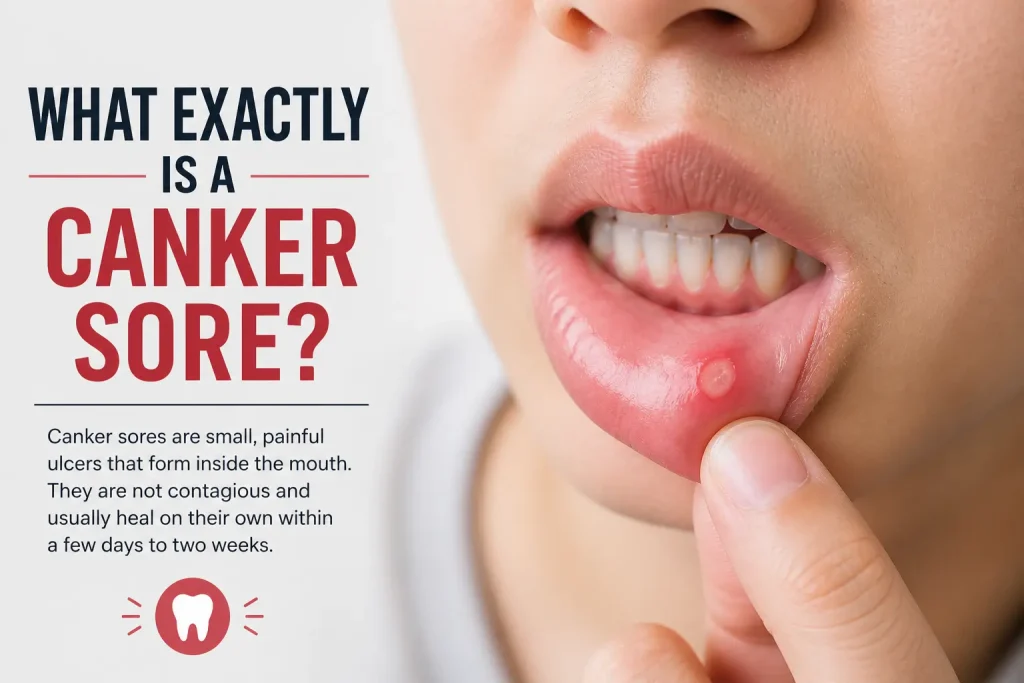
Canker sores, also called aphthous ulcers, are small, shallow ulcers that form inside the mouth. Unlike cold sores, they are not contagious and appear only on soft tissues such as:
- Inside the cheeks
- Lips
- Tongue
- Gums
They usually have a white or yellow center with a red border, and their main symptom is pain.
Types of Canker Sores
Not all canker sores are the same:
- Minor sores: Small and most common, healing within 1–2 weeks
- Major sores: Larger, deeper, and slower to heal
- Herpetiform sores: Clusters of many tiny ulcers
Understanding the type matters because it affects both pain level and healing time.
Why Canker Sores Hurt So Much
The pain of a canker sore isn’t random—it’s biological.
Inside your mouth are thousands of sensitive nerve endings. When a canker sore forms, it exposes underlying tissue, essentially creating a small open wound. Every time you eat, drink, or move your tongue, you’re irritating that exposed area.
At the same time, inflammation increases blood flow and sensitivity, making the area even more painful.
This combination—exposed tissue + inflammation + constant movement—is what makes canker sores feel worse than their size suggests.
What Causes Canker Sores?
Despite how common they are, the exact cause isn’t fully understood. But research has identified several strong triggers:
Common Triggers
- Stress and anxiety
- Minor injuries (biting your cheek, brushing too hard)
- Vitamin deficiencies (B12, iron, folate, zinc)
- Hormonal changes
- Certain foods (acidic or spicy)
- Toothpaste containing sodium lauryl sulfate (SLS)
In some cases, frequent sores may be linked to underlying conditions like immune disorders or digestive diseases.
The Three Factors That Control Healing Speed
Whether your sore heals quickly or slowly depends on three key factors:
Inflammation
More inflammation = more pain and slower healing.
Bacterial Environment
Bacteria can irritate the sore and delay recovery.
Repeated Irritation
Every time the sore is disturbed (food, tongue, brushing), healing resets slightly.
Fast healing is about controlling all three at the same time.
How to Heal a Canker Sore Fast (Step-by-Step)
Immediate Phase (First Few Hours)
The first goal is pain control and cleanliness.
- Rinse with warm salt water
- Apply a topical numbing gel
- Avoid touching the sore
This reduces irritation and creates a cleaner environment for healing.
Inflammation Control Phase (First 6–12 Hours)
Now focus on reducing swelling and bacteria:
- Use diluted hydrogen peroxide
- Apply milk of magnesia or honey
- Repeat salt rinses
These steps reduce inflammation and protect the sore.
Healing Acceleration Phase (12–24 Hours)
At this stage, the goal is protection and recovery:
- Eat soft, non-acidic foods
- Stay hydrated
- Continue protective treatments
Most people notice:
- Less pain
- Reduced redness
- Easier eating
within the first 24 hours.
Medical Treatments (When Home Remedies Aren’t Enough)
For severe or persistent sores, medical treatment may be necessary:
- Prescription mouth rinses (chlorhexidine, dexamethasone)
- Corticosteroid ointments
- Oral medications
- Laser treatment (in clinical settings)
These treatments reduce inflammation more aggressively and speed healing.
What Slows Down Healing (Critical Mistakes)
Many people unintentionally delay healing by doing the wrong things:
- Eating spicy or acidic foods
- Using alcohol-based mouthwash
- Constantly touching the sore
- Using harsh toothpaste
Even one of these can extend healing by several days.
When You Should See a Doctor
Most canker sores are harmless. But seek medical advice if:
- The sore lasts longer than 2 weeks
- You get frequent outbreaks
- Pain is severe
- You have fever or feel unwell
These may indicate an underlying condition.
How to Prevent Canker Sores
Prevention is mostly about avoiding triggers:
- Maintain good oral hygiene
- Use a soft toothbrush
- Avoid trigger foods
- Manage stress
- Check for vitamin deficiencies
For frequent sores, identifying the root cause is key.
Frequently Asked Questions
How long do canker sores last?
Most heal within 1–2 weeks, even without treatment.
Are canker sores contagious?
No, they are not caused by a virus and cannot spread.
Can you heal a canker sore in 24 hours?
Not completely—but you can significantly reduce pain and speed healing.
Conclusion
Canker sores may be small, but they are a perfect example of how sensitive the human body can be. What looks like a minor ulcer is actually a combination of inflammation, exposed tissue, and constant irritation.
They heal slowly not because they are serious—but because the mouth is one of the most active environments in the body.
The key to faster recovery is simple but powerful:
- Reduce inflammation, protect the sore, and avoid irritation.
Do that correctly, and those painful few days become much more manageable.
You May Also Like It:
Basic Coding Concepts – Beginners Guide
Simple Coding Projects for Beginners
Huffman Coding – The Core of Data Compression Explained
