
Introduction
You post on social media.
You try different content.
But you are not getting results.
The problem is not the platform. The problem is the approach.
Most people do not understand the real meaning of social media marketing. They think it is just about posting content, but in reality, it is a complete system.
In this guide, you will learn the exact meaning of social media marketing, how it works, and how to use it properly to grow your business.
What Is Social Media Marketing? (Meaning Explained)
Social media marketing (SMM) is a form of digital marketing that uses social media platforms such as Facebook, Instagram, TikTok, LinkedIn, and YouTube to promote products or services, build brand awareness, engage with audiences, and drive traffic or sales.
Simple Meaning
Social media marketing means using social media to attract people, engage them, and convert them into customers.
Social Media Marketing Meaning at a Glance
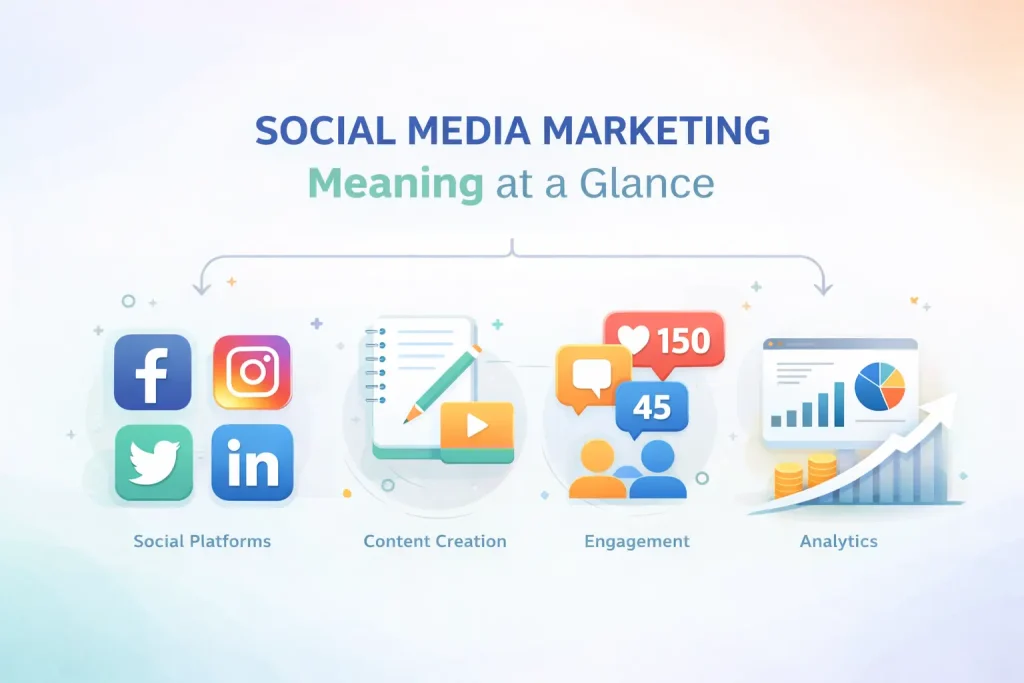
| Aspect | Explanation |
|---|---|
| Definition | Marketing using social media platforms |
| Goal | Awareness, traffic, leads, sales |
| Platforms | Facebook, Instagram, TikTok, LinkedIn, YouTube |
| Content | Videos, posts, reels, stories |
| Key Focus | Engagement and trust |
| End Result | Customer conversion |
Why Social Media Marketing Matters in 20
Social media is no longer optional. It is one of the main ways people discover brands.
- Over 6 billion users are active on social media
- Users spend more than 2 hours daily on platforms
- Many buying decisions start from social content
Key Benefits:
- Increase brand visibility
- Generate leads and sales
- Build trust with your audience
- Get real-time feedback
- Communicate directly with customers
How Social Media Marketing Works (Real Mechanism)
To understand social media marketing properly, you must understand how platforms distribute content.
Attention
Your content must stop users from scrolling.
This depends on strong hooks, visuals, and timing.
Engagement
Likes, comments, shares, and watch time signal value.
Algorithm Boost
Platforms push engaging content to more users.
Conversion
Users take action: follow, click, or purchase.
Without engagement, your content will not grow.
The 5 Pillars of Social Media Marketing
Strategy
Define goals, audience, and platforms.
Planning and Publishing
Create a content calendar and post consistently.
Listening and Engagement
Reply to comments and understand your audience.
Analytics and Reporting
Track performance and improve strategy.
Advertising
Use paid ads to scale your reach and conversions.
The 4C Framework (Practical Growth System)
To go beyond basic strategy, use this system:
Content
Create valuable and engaging posts.
Consistency
Post regularly (3–5 times per week).
Community
Build relationships through replies and interaction.
Conversion
Guide users toward action (buy, follow, sign up).
Step-by-Step Social Media Marketing Strategy
Step 1: Set Clear Goals
Use SMART goals like:
- Increase traffic by 20% in 3 months
- Generate 50 leads per month
Step 2: Identify Target Audience
Define:
- Age, location, interests
- Problems and needs
- Platforms they use
Step 3: Competitor Analysis
Study what works and improve it.
Step 4: Choose the Right Platforms
Focus on 2–4 platforms instead of all.
Step 5: Content Creation Strategy
Use:
- Educational content
- Entertaining posts
- Product demonstrations
- Customer testimonials
Step 6: Consistency and Timing
Post regularly and at the right time.
Step 7: Engagement Strategy
Reply quickly and encourage interaction.
Step 8: Measure and Optimize
Track results and improve continuously.
Types of Social Media Content That Work
- Short-form videos (Reels, TikTok, Shorts)
- Educational content (tips, guides)
- Entertaining content
- Product-based content
- User-generated content
Best content = value + engagement.
Real Example (Practical Insight)
Bad content:
“Buy our product”
Better content:
“3 ways this product solves your problem”
Why it works:
- Provides value
- Builds trust
- Encourages engagement
- Leads to higher conversions
Latest Trends in Social Media Marketing (2026)

Short-Form Video Dominance
Short videos generate the highest engagement.
AI-Driven Content Creation
AI helps create content and analyze data.
Social Commerce
Users can buy directly from platforms.
Micro-Influencer Marketing
Smaller influencers build more trust.
Community-Based Marketing
Brands focus on building communities.
Key Metrics to Track
- Engagement (likes, comments, shares)
- Reach and impressions
- Click-through rate
- Conversion rate
- Response time
Common Mistakes to Avoid
- Posting without a strategy
- Focusing only on selling
- Ignoring audience interaction
- Being inconsistent
- Copying competitors blindly
Advantages of Social Media Marketing
- Cost-effective
- Direct communication
- High targeting capabilities
- Real-time insights
- Scalable growth
Disadvantages of Social Media Marketing
- Time-consuming
- Requires consistent effort
- Algorithm changes
- Public negative feedback
- Results take time
Frequently Asked Questions (FAQ)
What is social media marketing in simple words?
It means using social media platforms to promote products, connect with people, and generate sales.
Why is social media marketing important?
It helps businesses reach a large audience, build trust, and increase sales.
What are examples of social media marketing?
Posting videos, running ads, collaborating with influencers, and sharing educational content.
Which platform is best for social media marketing?
It depends on your audience. Instagram and TikTok are great for B2C, while LinkedIn works best for B2B.
Final Thoughts
Social media marketing is not just about posting content. It is a structured system built on strategy, consistency, engagement, and data.
Businesses that focus on providing value, understanding their audience, and improving based on data will succeed in the long term.
