
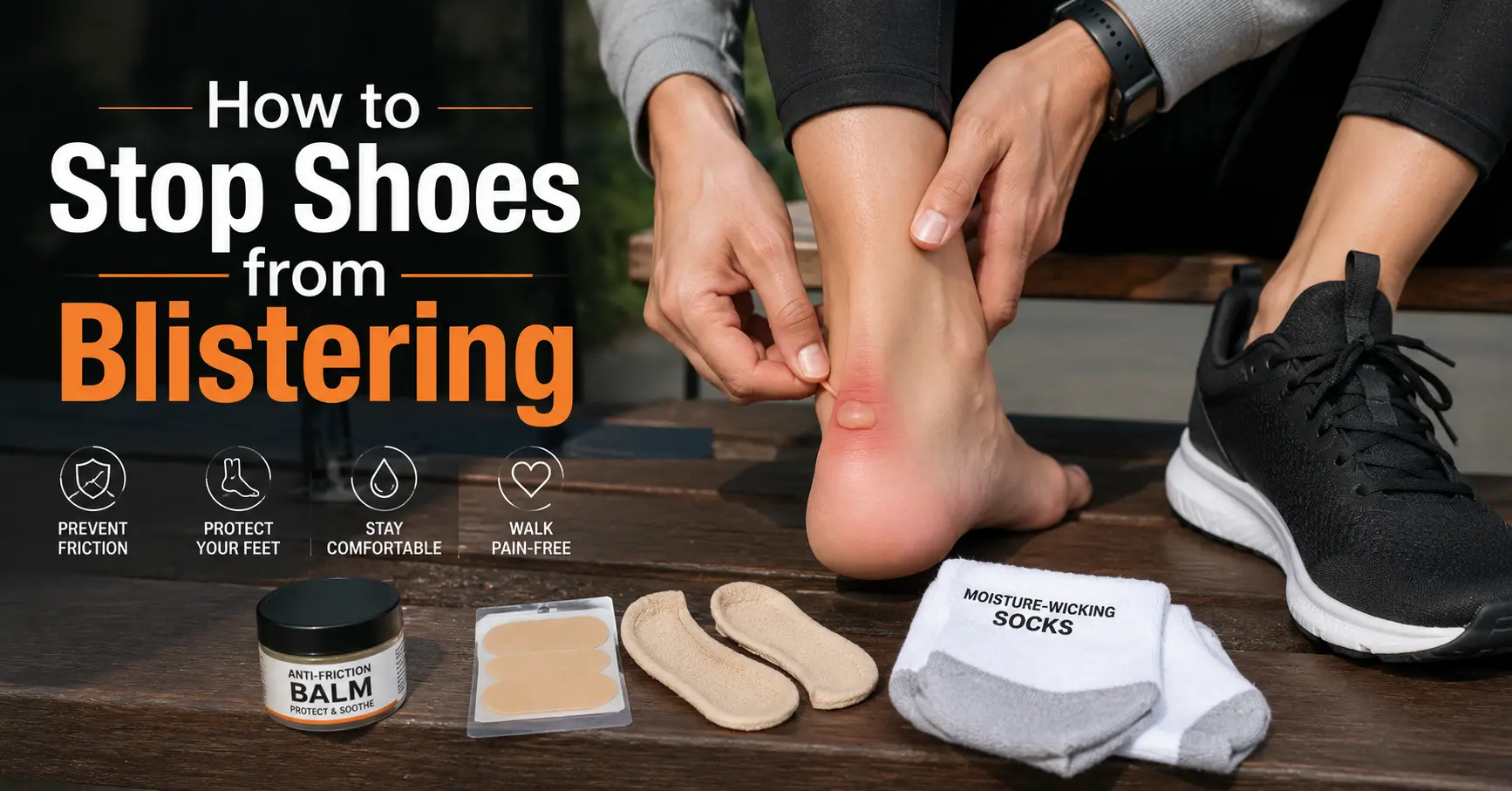
You bought a new pair of shoes, wore them for a few hours, and ended up limping home with a raw, fluid-filled blister on your heel. Sound familiar? You’re far from alone. Shoe blisters are one of the most common foot complaints — and one of the most preventable.
If you’re wondering How to Stop Shoes from Blistering, the good news is that a few simple adjustments can make a huge difference. From choosing the right fit to reducing friction and moisture, there are proven ways to keep your feet comfortable and blister-free.
This guide cuts through the generic advice to give you practical, tested strategies to stop shoes from blistering. Whether you’re breaking in stiff leather oxfords, training in new running shoes, or wearing heels for a long day, there’s a solution here for your specific situation.
What Actually Causes Shoe Blisters?
Before you can prevent blisters, it helps to understand exactly why they form. A blister is your body’s defence mechanism. When repeated friction forces the upper layers of skin apart, your body floods that gap with fluid to cushion and protect the tissue underneath.
Three factors drive almost every shoe blister:
Friction — The primary culprit. Any repetitive rubbing between your skin and the inside of your shoe triggers the skin separation process. The longer the rubbing continues, the worse the blister becomes.
Moisture — Wet skin is significantly more susceptible to friction damage than dry skin. Sweat, wet socks, or humid conditions dramatically increase blister risk. Research into military and athletic populations consistently finds that moisture is one of the most controllable blister risk factors.
Heat — Warmth softens the skin and makes it more vulnerable to shear forces. This is why blisters are more common in summer and during intense exercise when foot temperature rises.
The most common blister hotspots are the back of the heel, the sides and tops of toes, the ball of the foot, and the outside edge of the little toe. These are the areas that take the most concentrated pressure and rubbing in most shoe types.
The Most Common Reasons Shoes Cause Blisters
Knowing the root cause helps you target the right solution:
- New or stiff shoes — Unworn shoes haven’t yet moulded to your foot shape. Stiff materials create pressure points in spots your skin isn’t used to.
- Wrong size — Shoes that are too tight create constant pressure; shoes that are too loose allow excessive foot movement and slipping, increasing friction. Both cause blisters.
- Heel slippage — When your heel lifts with each step, it repeatedly rubs against the back of the shoe. This is the single most common cause of heel blisters.
- Poor sock choice — The wrong socks (or no socks) leave your skin exposed to direct friction.
- Rough internal seams — Badly finished internal stitching can act like sandpaper on soft skin.
- Foot shape mismatches — Wide feet in narrow shoes, high arches in flat insoles, and bunions or hammer toes all create pressure points that lead to blisters.
15 Ways to Stop Shoes from Blistering
1. Get the Right Fit — and Measure Later in the Day
This sounds obvious, but most people underestimate how important shoe fit is to blister prevention. Your feet naturally swell throughout the day — sometimes by a full half-size. Always try on shoes in the afternoon or evening when your feet are at their largest.
The right fit means: about a thumb’s width of space between your longest toe and the end of the shoe, a snug (not tight) width, and a heel that stays in place when you walk. Have your feet professionally measured if you’re unsure — most people haven’t had their feet measured since childhood, and foot size does change with age.
What competitors miss: If you buy shoes online, consider ordering a half-size up and using an insole to fine-tune the fit. This often gives you better length without sacrificing heel security.
2. Break New Shoes In Gradually
Never wear brand-new shoes for a full day right away, regardless of how comfortable they feel in the shop. Start with 30–60 minutes around the house, then gradually extend the wear time over one to two weeks. This gives the shoe material time to soften and conform to your foot shape, and gives your skin time to toughen slightly at pressure points.
For leather shoes specifically, this break-in period is non-negotiable. Leather stiffens with age and temperature but softens with warmth and use — the gradual approach genuinely works.
3. Use Anti-Friction Balm or Body Glide on Hotspots
One of the most underrated and effective blister prevention methods is applying an anti-friction product directly to your skin before putting on your shoes. Products like Body Glide, petroleum jelly (Vaseline), or dedicated anti-blister sticks create a slippery barrier between your skin and the shoe, dramatically reducing friction.
Apply it to any area that feels tight or warm after wearing the shoes — your personal hotspots. Reapply if you’re doing a long walk or hike.
Petroleum jelly tip: It works well but can feel greasy and stain socks. If that’s a concern, a solid anti-chafe balm or blister-prevention stick is a cleaner option.
4. Choose Your Socks Wisely
Your socks are the first line of defence between your skin and your shoe, and the difference between the right and wrong pair is enormous.
- Moisture-wicking synthetic or merino wool socks are far better than cotton for blister prevention. Cotton absorbs moisture and holds it against your skin; technical fabrics pull moisture away.
- Seamless or flat-seam socks eliminate a common friction source, especially important at the toe box.
- Double-layer socks (like those from Wrightsock or Injinji) are designed specifically for blister prevention. The two layers slide against each other instead of against your skin.
- Thickness matters: For new or stiff shoes, thicker socks provide a cushioning buffer while the shoe breaks in. For a snug-fitting shoe, a thinner sock may be more appropriate to avoid excess pressure.
What competitors miss: Never wear the same pair of socks two days running for high-activity use. Socks compress and lose cushioning after a day of wear, reducing their protective benefit.
5. Protect Hotspots with Blister Plasters or Moleskin Before They Form
Don’t wait for a blister to appear before you protect the area. If you know from experience that your left heel always rubs in new shoes, apply a blister plaster or a piece of moleskin padding there before you head out.
Hydrocolloid blister plasters (available from brands like Compeed or Band-Aid) are particularly good because they cushion the area, reduce friction, and can be left in place for several days. They’re far more comfortable than regular plasters and create a second-skin effect.
Pro tip: Carry a couple of plasters in your bag whenever you’re wearing new or unfamiliar shoes. Applying one at the first sign of redness or warmth can stop a blister from forming entirely.
6. Try Surgical or Athletic Tape
Rigid sports tape (like zinc oxide tape or kinesiology tape applied flat) over a hotspot creates a tough, slick surface that resists friction far better than bare skin. This is a technique used by long-distance runners, hikers, and military personnel with great success.
Apply the tape smoothly with no creases — any wrinkle becomes a friction point of its own. For the back of the heel, start the tape below the hotspot and wrap upward.
7. Use Heel Grips and Insoles to Fix Slippage
If your shoes slip at the heel — even slightly — heel grips are a game-changer. These are small adhesive pads that you stick to the inside back of your shoe. They grip your heel, eliminate the lift-and-rub motion, and often make a loose shoe feel significantly more secure.
Similarly, a well-chosen insole can reposition your foot inside the shoe, redistributing pressure away from hotspots. Gel insoles absorb shock; foam insoles add cushioning; orthotic insoles correct alignment. If your blister problem is recurring and in the same spot every time, an insole is worth trying before spending more on new shoes.
8. Soften Stiff Leather with a Hairdryer
For leather shoes specifically, you can accelerate the break-in process using gentle heat. Put on a pair of thick socks, wear your shoes, and briefly apply a hairdryer on a low setting to the stiff areas for 20–30 seconds at a time. Move the dryer constantly to avoid overheating any single spot. Walk around immediately while the leather is warm and pliable.
Important: Only do this on genuine leather or suede. Synthetic materials can warp, bubble, or melt with heat. Never hold the dryer in one place or use a high heat setting.
9. Stretch Tight Spots with Ice Bags
If heat doesn’t suit your shoe material, try the opposite. Fill two zip-lock bags with water, seal them, place them in the toe box area of your shoes (or wherever they’re tight), and put the shoes in the freezer overnight. Water expands as it freezes, gently stretching the shoe from the inside.
Remove the shoes from the freezer and let the ice melt before taking the bags out, to avoid cracking any adhesives or damaging the structure. This works particularly well on canvas, fabric, and softer leather shoes.
10. Use a Shoe Stretcher for a Lasting Fit
If the same shoe is consistently giving you blisters in the same spot due to tightness, a wooden or plastic shoe stretcher is a more targeted solution. You can buy stretchers that fit specific problem areas — width, bunion spots, or toes — and many cobblers offer professional stretching services if you’d rather leave it to an expert.
Unlike the heat or ice methods, a shoe stretcher provides gradual, even expansion overnight without any risk of material damage.
11. Address Internal Seams
Run your hand inside your new shoes and feel for any raised, rough, or hard seams — particularly across the toe box, around the heel, or along the sides. A rough seam in the wrong place will create a blister regardless of how well the shoe fits otherwise.
For minor seam issues, you can try:
- Placing moleskin padding over the seam (inside the shoe, not on your foot)
- Using a leather conditioner or balm to soften a hard seam
- Taking the shoes to a cobbler who can sand down or re-stitch a problematic seam
12. Lace Your Shoes Properly
The way you lace your shoes affects how your foot sits inside them. If your heel slips, try the “heel lock” or “lace lock” technique: thread the lace through the top eyelet on the same side before crossing over to create a loop, then lace through that loop on each side before tying. This locks the heel firmly in place and eliminates slippage for many people.
If your toe box feels too tight, try leaving the top two eyelets unlaced or use a skipping pattern that relieves pressure over the problem area.
What competitors miss: Lacing technique is almost never mentioned in blister guides, but it’s one of the most effective and completely free fixes available.
13. Keep Your Feet Dry
Moisture multiplies friction damage. There are several strategies to keep feet drier during wear:
- Apply a foot antiperspirant (yes, these exist — products like Driclor or Certain Dri) to areas prone to sweating before long days or hikes
- Change socks mid-day if you’re doing extended walking or hiking
- Let feet air out when possible during breaks
- Dry your shoes thoroughly between wears — wearing damp shoes is an almost guaranteed way to develop blisters
For hikers and runners specifically: if you cross a stream or get caught in rain, stop and change into dry socks as soon as possible. Wet feet blister within minutes of continued activity.
14. Consider Shoe Type and Material for Your Activity
Not all shoes are right for all activities, and wearing the wrong shoe for an activity is one of the most overlooked causes of blisters. Running in casual shoes, hiking in gym trainers, or standing all day in fashion footwear all create abnormal pressure patterns that cause blisters.
Match your shoe to your activity:
- Running shoes should be activity-specific (road vs trail), fitted with your running socks on, and replaced every 500–800 km before cushioning compresses
- Work shoes for standing jobs need substantial cushioning and a wider toe box
- Heels should ideally have platform support to reduce forefoot pressure; gel ball-of-foot pads are almost essential for long wear
- New hiking boots should be broken in over multiple short hikes before any long trail
15. Strengthen and Toughen Your Feet Over Time
This is a long-game strategy that most guides ignore entirely. Your skin becomes tougher and more resilient to friction with regular exposure. If you’re a runner or hiker, gradually increasing your mileage allows your skin to adapt alongside your fitness.
Keeping your feet well-moisturised (but not overly soft) with a good foot cream also helps maintain skin integrity — cracked, dry skin is more prone to blister formation because it tears more easily under shear stress.
Some experienced long-distance runners and military personnel use repeated tape application and removal to build up skin resilience at specific hotspots over time.
Special Situations: Blister Prevention by Shoe Type
New Leather Dress Shoes
Use the hairdryer method, wear thick socks initially, apply leather conditioner to stiff areas, and target the heel with heel grips. Leather shoes are worth breaking in slowly — they’ll eventually be some of the most comfortable shoes you own.
Running Trainers
Fit with your running socks on and always at the end of the day. Use double-layer or technical moisture-wicking socks. Apply Body Glide to toes and heels before longer runs. Ensure the toe box gives your toes room to spread naturally.
High Heels
Use gel ball-of-foot pads to prevent the forefoot from sliding forward. Apply toe cap protectors or moleskin to the back of the heel. Choose heels with ankle straps for better stability. Limit continuous wear time and bring flat shoes to change into if needed.
Hiking Boots
Break in over four to six short hikes before any extended trail. Wear proper hiking socks (merino wool is excellent). Use the heel lock lacing technique. Address any hotspots immediately with tape — don’t push through early discomfort on a long hike.
What to Do If You Get a Blister Anyway
Even with the best prevention, blisters happen. Here’s the right way to handle one:
Leave it intact if possible. The fluid-filled roof of the blister protects the healing skin beneath. An intact blister is less likely to become infected and heals faster than a broken one.
Cover it. Apply a hydrocolloid blister plaster or a sterile dressing that covers the entire blister. Remove the source of friction — don’t wear the same shoes until you’ve addressed what caused it.
If it bursts naturally, don’t remove the skin. Clean gently with mild soap and water, apply a small amount of antiseptic, and cover with a sterile bandage. The flap of skin still protects the tissue underneath.
Never drain a blister unnecessarily — but if a large, painful blister is preventing you from walking, you can drain it carefully with a sterilised needle at the edge, press the fluid out gently, and leave the skin roof in place. Clean and cover afterward.
See a doctor if: the blister becomes red, warm, or swollen beyond the blister itself; you see red streaks spreading from it; the fluid turns cloudy or yellow; or you have diabetes or a condition that affects circulation or healing. Infected blisters can escalate quickly in immunocompromised individuals.
When to See a Podiatrist
If you’re getting blisters repeatedly in the same location despite trying multiple prevention strategies, there may be an underlying biomechanical issue. A podiatrist can assess your gait, foot shape, and pressure distribution. They may recommend custom orthotics, identify a structural issue (like a bunion or hammer toe) that’s creating unavoidable pressure, or advise on the best shoe type for your specific foot.
This is especially worth pursuing if blisters are interfering with your exercise routine, work, or daily life.
Quick-Reference: Best Blister Prevention by Situation
| Situation | Top Prevention Tips |
|---|---|
| New dress shoes | Gradual break-in, heel grips, thick socks initially |
| Running/sport | Double-layer socks, anti-friction balm, correct size |
| Hiking | Wool socks, heel lock lacing, early tape at hotspots |
| High heels | Gel pads, toe protectors, moisture-wicking liner socks |
| Long walking day | Blister plasters pre-applied, spare socks in bag |
| Hot weather | Foot antiperspirant, moisture-wicking socks, midday change |
The Bottom Line
Shoe blisters are caused by friction, moisture, and heat — often all three at once. The most effective prevention strategy combines getting the right fit, using the right socks, protecting known hotspots before they become painful, and managing moisture. No single trick works for everyone, which is why it’s worth experimenting with a few of the approaches above until you find what works for your feet and your shoes.
Most importantly: don’t ignore early warning signs. That slight warmth or redness on your heel is your skin telling you friction is building. Act on it early and you’ll almost always avoid the blister altogether.
How to Remove Dog Hair from Clothes: The Complete Guide That Actually Works
Why Can’t I Focus? Here’s What’s Really Going On (and How to Fix It)
How to Astral Project: A Beginner’s Step-by-Step Guide
Debby Clarke Belichick: The Full Story of Bill Belichick’s Ex-Wife
