
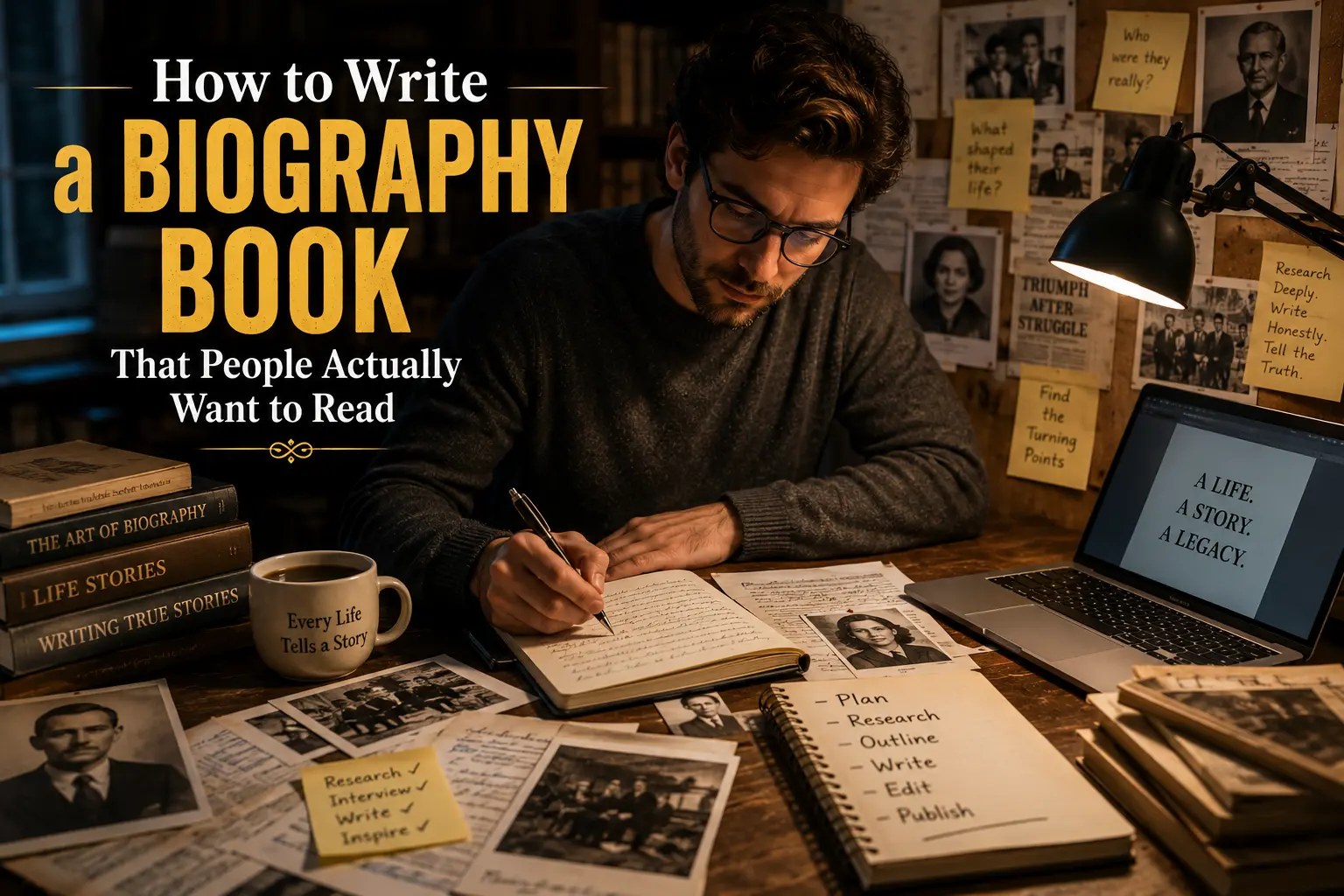
Writing a biography book sounds simple at first. Someone already lived the story, so all you have to do is write it down, right?
Not exactly.
If you want to learn how to write a biography book that people actually enjoy reading, you need much more than dates and facts. A great biography book is a carefully researched story that helps readers understand who a person really was, what shaped them, what they feared, what they achieved, and why their life mattered.
That is why some biography books become unforgettable bestsellers while others feel like long Wikipedia pages.
Whether you are trying to learn how to write biography content professionally or wondering how to write a biography of a person in a more emotional and engaging way, this guide covers everything you need — including important details most competitors completely ignored.
Biography Writing at a Glance
Best Biography Length: 50,000–90,000 words | Best Research Sources: Interviews, letters, archives, newspapers, social media | Most Common Mistake: Writing only in chronological order | Best Writing Style: Story-driven nonfiction | Best Tools: Notion, Scrivener, Otter AI, Google Docs | Biggest Goal: Make readers emotionally care about the subject
What Is a Biography Book?
A biography book is a detailed account of another person’s life written by someone else.
Unlike an autobiography, where the subject writes about themselves, a biography requires outside research, interviews, fact-checking, and storytelling.
A biography can focus on:
- Historical figures
- Celebrities
- Athletes
- Entrepreneurs
- Artists
- Family members
- Political leaders
- Ordinary people with extraordinary stories
The goal is not only to explain what happened in someone’s life but also why those experiences mattered.
How to Write a Biography of a Person
If you want to know how to write a biography of a person properly, start with one important rule:
A biography should feel like a story, not a school report.
Readers want emotion, conflict, transformation, and meaning.
That is what separates a memorable biography from a boring one.
Choose the Right Subject
Not every life can carry an entire book.
The strongest biography subjects usually have:
- Personal struggles
- Big achievements
- Emotional turning points
- Complex personalities
- Influence on others
- Interesting contradictions
Perfect people are rarely interesting.
Flawed people are human — and humans create great stories.
Understand Why This Story Matters
This is something many competitors barely explained.
Before writing, ask yourself:
- Why should readers care about this person?
- What makes this life unique?
- What lesson or emotional journey does this story offer?
- What central theme connects the person’s life?
Without a strong reason behind the biography, the book becomes a list of events instead of a meaningful narrative.
The best biographies usually revolve around themes like:
- ambition
- survival
- fame
- redemption
- reinvention
- leadership
- sacrifice
- failure
- resilience
This theme becomes the emotional backbone of the book.
Research Deeply
Research is the foundation of biography writing.
Weak research creates shallow biographies. Strong research creates authority and trust.
Primary Sources
Primary sources come directly from the subject or their time period.
Examples include:
- interviews
- letters
- emails
- diaries
- photographs
- videos
- voice recordings
- social media posts
- legal documents
These sources help you understand the person’s real voice and personality.
Secondary Sources
Secondary sources provide context and background information.
Examples include:
- newspaper articles
- documentaries
- other biographies
- academic journals
- historical books
Use secondary sources to verify facts and understand the larger world around the subject.
Modern Research Methods Most Writers Ignore
Many older biography guides never discuss modern digital research.
Today, writers can use:
- YouTube interviews
- podcast appearances
- online newspaper archives
- social media timelines
- AI transcription tools
- digital libraries
- genealogy websites
- public databases
These tools can save massive amounts of time and uncover details competitors miss.
Interview People Early
One of the biggest mistakes beginner writers make is waiting too long to conduct interviews.
Memories fade.
People move on.
Important witnesses may become unavailable later.
Interview:
- family members
- friends
- coworkers
- rivals
- mentors
- classmates
- former partners
Ask open-ended questions like:
- “What was this person really like?”
- “What misunderstanding do people have about them?”
- “What changed their life the most?”
- “What did they fear privately?”
- “What moment defined them?”
The answers often become the most emotional sections of the biography.
Organize Your Research Properly
This is another area competitors barely covered.
Biography research becomes overwhelming very quickly.
Create separate folders or sections for:
- childhood
- education
- career
- relationships
- failures
- achievements
- interviews
- quotes
- controversies
- timeline events
Helpful tools include:
- Notion
- Scrivener
- Google Docs
- Evernote
- Obsidian
Good organization saves hundreds of hours later.
Build a Timeline
Create a timeline before writing the book.
Include:
- birth
- education
- career milestones
- relationships
- major failures
- important successes
- controversies
- life-changing moments
This helps you understand the subject’s full journey clearly.
However, here is the important part competitors rarely explain properly:
Your biography should not feel like a boring year-by-year history lesson.
The Biggest Biography Writing Mistake
Many biographies fail because they only follow chronology.
Real storytelling is about emotional momentum, not dates.
Instead of asking:
“What happened next?”
Ask:
“Why did this moment matter?”
Great biographies focus on:
- emotional conflict
- transformation
- internal struggles
- goals
- fears
- consequences
That is what keeps readers turning pages.
Find the Central Narrative
The best biographies feel almost like novels because they follow a strong narrative thread.
Examples include:
- the rise and fall of power
- overcoming poverty
- the cost of fame
- obsession with success
- survival against impossible odds
- redemption after failure
Everything in the biography should connect back to this central emotional story.
Write a Powerful Opening
Most readers decide within minutes whether they will continue reading.
One of the worst ways to begin is:
“John Smith was born in 1972…”
That feels flat and lifeless.
Instead, begin with:
- a dramatic scene
- a major conflict
- a turning point
- a shocking moment
- an emotional memory
Example:
“On the night before the company collapsed, Daniel Harper sat alone in his office staring at the final email that would destroy everything he spent twenty years building.”
That immediately creates curiosity.
Show the Human Side
Readers do not just want achievements.
They want:
- fears
- regrets
- failures
- insecurities
- relationships
- habits
- emotional struggles
Do not write your subject like a superhero.
Write them like a real person.
That emotional realism creates connection.
Balance Facts With Storytelling
Many beginner biographies become boring because they focus only on facts.
Facts matter.
But storytelling is what makes readers care.
Good biographies use:
- scene-building
- emotional pacing
- suspense
- atmosphere
- sensory detail
- psychological depth
For example, instead of writing:
“Sarah became successful in 2005.”
Explain:
- what obstacles she faced
- what sacrifices she made
- what emotions drove her
- what nearly caused her to fail
That creates emotional investment.
Use Dialogue Carefully
You may not always know exact conversations.
Never invent fake quotes and present them as facts.
Instead:
- use verified quotes
- clearly identify reconstructed dialogue
- remain truthful to available evidence
Accuracy is critical in biography writing.
Add Historical and Cultural Context
People do not live in isolation.
Readers need to understand:
- politics
- culture
- technology
- economic conditions
- social expectations
For example, growing up during war, poverty, or political unrest deeply affects personality and choices.
Context helps readers understand why the subject acted the way they did.
Understand Legal and Ethical Risks
Most competitors barely discussed this important topic.
Biography writers must be careful about:
- defamation
- false accusations
- privacy violations
- unsupported claims
Always verify controversial information carefully.
If writing about living people, fact-check everything thoroughly before publishing.
AI Tools That Can Help Biography Writers
Most competitor articles completely ignored this modern topic.
Today, AI tools can help with:
Interview Transcription
Apps like Otter AI can convert interviews into text automatically.
Research Summaries
AI can organize notes and summarize long documents faster.
Timeline Creation
AI tools can help arrange events chronologically.
Editing and Readability
Grammar tools improve clarity and flow.
However, AI should support your work — not replace real research or human storytelling.
Common Biography Writing Mistakes
Writing Like Wikipedia
A biography should feel alive, emotional, and human.
Including Too Many Small Details
Not every fact deserves space in the book.
Only include details that strengthen the story.
Making the Subject Look Perfect
Perfect characters feel unrealistic.
Readers connect more with flaws and struggles.
Weak Openings
Slow beginnings lose readers quickly.
Overloading Readers With Research
Research is important, but storytelling matters more.
Readers want meaning, not endless data.
How Long Should a Biography Book Be?
The ideal length depends on the subject and audience.
Typical ranges include:
- Short biography: 20,000–40,000 words
- Standard biography: 50,000–90,000 words
- Detailed historical biography: 100,000+ words
Focus on quality and emotional depth instead of word count alone.
How to Publish a Biography Book
You have two main publishing options.
Traditional Publishing
Pros:
- professional editing
- stronger distribution
- industry credibility
Cons:
- competitive process
- slower publishing
- less creative control
Self-Publishing
Popular platforms include:
- Amazon Kindle Direct Publishing
- IngramSpark
- Draft2Digital
Pros:
- faster release
- full creative control
- higher royalty percentages
Cons:
- marketing becomes your responsibility
Frequently Asked Questions
How do you start a biography book?
Start with a dramatic moment, emotional conflict, or major turning point instead of basic birth details.
What makes a biography interesting?
Strong storytelling, emotional depth, human flaws, and meaningful transformation make biographies engaging.
Can you write a biography without permission?
Yes, especially for public figures, but you must avoid false claims, privacy violations, and defamation.
How long does it take to write a biography?
A well-researched biography can take several months to several years depending on research depth.
What is the difference between a biography and autobiography?
A biography is written by someone else. An autobiography is written by the subject themselves.
Final Verdict
Learning how to write a biography book takes far more than collecting facts and arranging events in order. A great biography combines deep research, emotional storytelling, strong structure, and historical context to create something readers genuinely remember.
The best biographies do not simply explain what happened in someone’s life.
They explain why it mattered.
If you want your biography to stand out, focus on:
- emotional storytelling
- accurate research
- strong openings
- human complexity
- meaningful themes
- narrative structure
Facts tell readers what happened.
Storytelling helps them feel it.
You May Also Like It:
Basic Coding Concepts – Beginners Guide
Simple Coding Projects for Beginners
Huffman Coding – The Core of Data Compression Explained
