

Introduction
In today’s digital era, every website or mobile application relies on a strong backend system. While the frontend is responsible for what users see, the backend powers everything behind the scenes—from managing databases to handling requests and ensuring security. If you are planning to start a career in backend development, following a structured roadmap can help you learn step by step and avoid confusion.
This guide will walk you through the backend development roadmap, covering essential skills, technologies, and tools required to become a successful backend developer.
Understanding Backend Development
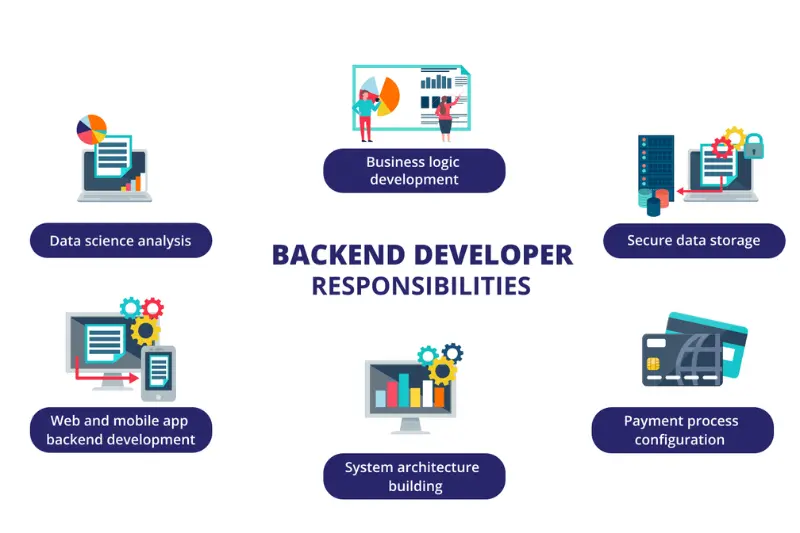
Backend development refers to the server-side part of an application. It handles:
- Data storage and retrieval
- User authentication
- Business logic
- API creation for frontend communication
In simple words, the backend ensures that when a user clicks a button on a website, the right data is fetched, processed, and delivered back to the user.
You May Like It:
Python Backend Development: A Complete Guide
Coding Basics for Beginners – Learn Step by Step
Best Backend Languages to Learn in 2025
Step 1: Learn the Fundamentals
Before jumping into coding, it’s important to understand:
- How the Internet Works (HTTP, HTTPS, DNS, hosting)
- Client-Server Architecture
- APIs (REST, GraphQL basics)
This foundation helps you understand how applications communicate and how data flows across systems.
Step 2: Choose a Programming Language
Backend development can be done in multiple languages. Some of the most popular options are:
- JavaScript (Node.js) – Fast and widely used
- Python (Django, Flask, FastAPI) – Beginner-friendly with powerful libraries
- Java (Spring Boot) – Enterprise-level applications
- PHP (Laravel) – Still popular for content-driven sites
- Go & Ruby – Known for speed and simplicity
Choose one language and master it instead of trying to learn all at once.
Step 3: Work with Databases
A backend developer must know how to manage and optimize databases.
- Relational Databases (SQL): MySQL, PostgreSQL
- NoSQL Databases: MongoDB, Redis
Learn how to design schemas, write queries, and use ORMs (Object-Relational Mapping) to interact with databases.
Step 4: Learn Backend Frameworks
Frameworks speed up development by providing built-in features. Examples include:
- Node.js: Express.js, Nest.js
- Python: Django, Flask
- Java: Spring Boot
Each framework has strengths. Pick one that fits your chosen language.
Step 5: Authentication & Security
Security is a critical part of backend development. You need to learn:
- Authentication vs Authorization
- JWT (JSON Web Tokens), OAuth, SSO
- Protecting applications from SQL injection, XSS, CSRF attacks
- Using HTTPS and encrypting data
Step 6: APIs & Microservices
Most applications rely on APIs to communicate with the frontend. Learn:
- REST API principles
- GraphQL for flexible data queries
- Microservices architecture for scalable applications
- API documentation tools like Swagger and Postman
Step 7: Server & Deployment
Once your backend is ready, you need to deploy it. Important tools include:
- Web Servers: Nginx, Apache
- Cloud Hosting: AWS, Azure, Google Cloud, DigitalOcean
- Containerization: Docker, Kubernetes
- CI/CD Pipelines: GitHub Actions, Jenkins
Step 8: Version Control & Collaboration
Git is a must-have skill for backend developers. Learn:
- Git basics (commit, push, pull, merge)
- GitHub/GitLab for collaboration
- Branching strategies and code reviews
Step 9: Advanced Topics
To grow as a professional, explore advanced backend concepts:
- Caching: Redis, Memcached
- Message Brokers: RabbitMQ, Kafka
- Graph Databases: Neo4j
- Scaling Systems: Load balancing, clustering, horizontal scaling
Step 10: Soft Skills & Career Growth
A good backend developer doesn’t just code; they also collaborate with teams. Focus on:
- Problem-solving and system design skills
- Clear communication with frontend, DevOps, and project managers
- Building real-world projects (e-commerce sites, APIs, chat apps)
Preparing for technical interviews with coding challenges and system design questions
You May Like It:
What is Secure Web Gateway (SWG) : Features Benefits and Future
Web Security: Importance Best Practices and Future Trends
Front-End Engineer: Role, Skills, and Career Guide
Resources & Learning Path
Here are some ways to keep learning:
- Online courses (Udemy, Coursera, Frontend Masters)
- Books like Designing Data-Intensive Applications
- GitHub projects and open-source contributions
- Communities like Stack Overflow, Reddit, and Discord
Common FAQs on Backend Development Roadmap
What is backend development?
Backend development refers to the server-side of a website or application that manages data, processes requests, and ensures proper communication between the frontend and databases.
Why is backend development important?
The backend is the backbone of any application. It handles business logic, data storage, authentication, and ensures smooth user experience by powering frontend requests.
Which programming language is best for backend development?
Popular backend languages include JavaScript (Node.js), Python, Java, PHP, and Go. The best choice depends on your project goals and personal preference.
Is backend development hard for beginners?
Backend development can be challenging at first, but with a proper roadmap, practice, and real-world projects, beginners can gradually master it.
Do backend developers need to know frontend?
It’s not mandatory, but having basic frontend knowledge (HTML, CSS, JavaScript) helps backend developers collaborate better with frontend teams.
What are the most important skills for backend developers?
Key skills include:
Strong knowledge of a backend language
Database management
API development
Security best practices
Server deployment and version control (Git)
What is the difference between frontend and backend development?
Frontend is what users see and interact with (UI/UX), while backend works behind the scenes—managing data, servers, and business logic.
What are the best databases for backend development?
Some popular choices include:
SQL: MySQL, PostgreSQL
NoSQL: MongoDB, Redis
Do backend developers need to learn DevOps?
Not necessarily, but having basic knowledge of servers, cloud platforms, and CI/CD pipelines gives backend developers an edge in real-world projects.
How long does it take to learn backend development?
It depends on your dedication. With consistent learning and practice, beginners can build a solid foundation in 6–12 months.
Conclusion
Becoming a backend developer is a journey that requires patience, practice, and continuous learning. This backend development roadmap gives you a structured path—from learning fundamentals to mastering advanced concepts. Whether you are a beginner or a professional looking to upgrade your skills, following this roadmap will guide you toward building efficient, secure, and scalable backend systems.
You May Like It
Easiest Coding Language to Learn in 2025
Frontend Masters: A Complete Guide for Web Developers
Frontend Mentor: A Complete Guide for Web Developers
Highest Paying Coding Languages in 2025
